by DR. Ricardo Petrissans | Oct 6, 2025 | News, The protagonists of IA
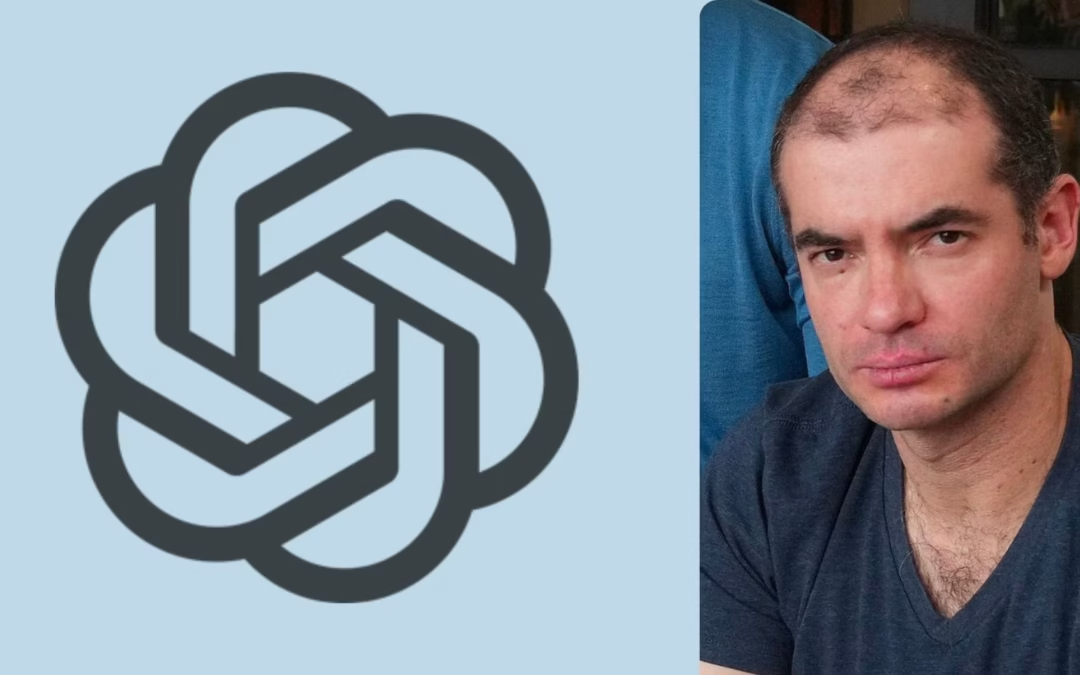
Ilya Sutskever (born in 1985) is one of the most influential researchers in artificial intelligence (AI) of the 21st century. Co-founder and Chief Scientist of OpenAI, his work has been key to the development of models such as GPT-3, GPT-4, DALL·E, and ChatGPT, redefining what machines can achieve. Known for his bold vision of the future of AI and his focus on the safety of advanced systems, Sutskever is a central figure in the transition of AI from academic laboratories to applications transforming society.
Academic Background and Early Achievements
Origins and Education: He was born in the Soviet Union (now the Russian Federation), emigrated to Israel at age five, and later to Canada, where he studied at the University of Toronto. Under the mentorship of Geoffrey Hinton (the “father of deep learning”), he earned his PhD in 2013 with a groundbreaking thesis on deep neural networks.
His foundational contributions include:
- AlexNet (2012): As Hinton’s student, he co-designed this convolutional neural network that won the ImageNet competition, marking the beginning of the modern deep learning era.
- Seq2Seq (2014): Alongside Oriol Vinyals and Quoc Le, he developed a model for automatic translation that laid the groundwork for systems like Google Translate.
OpenAI: From Research to Global Transformation
In 2015, Sutskever co-founded OpenAI with Sam Altman, Elon Musk, and others, with the mission of ensuring that Artificial Intelligence benefits all of humanity. His role as Chief Scientist positioned him as the technical leader of key projects, including:
- GPT (Generative Pre-trained Transformer): He led the development of language models that revolutionized Generative Artificial Intelligence. GPT-3 (2020) and GPT-4 (2023) demonstrated unprecedented abilities in understanding and generating text.
- DALL·E and CLIP: Models that unify text and image, allowing digital art generation from descriptions or accurate image classification.
- ChatGPT (2022): Under his technical leadership, this chatbot reached 100 million users in just two months, popularizing conversational AI.
Philosophical Vision and Focus on Safety
Sutskever is an advocate for Artificial Intelligence aligned with human values, warning of existential risks if superintelligent systems escape control. His key ideas include:
- “Artificial intelligence as an engine of the human mind”: He believes AI will amplify creativity and help solve problems like climate change and diseases.
- Iterative supervision: He proposes training models through constant human feedback to prevent harmful behaviors.
- Preparation for Artificial General Intelligence (AGI): He insists that AGI could emerge within decades, making it crucial to develop ethical and technical safeguards now.
In 2023, his role was crucial during OpenAI’s internal crisis, when he advocated for balancing innovation with caution after Sam Altman’s dismissal and subsequent reinstatement as CEO.
Challenges and Criticisms
His work has not been free from challenges and criticism:
- Centralization of power: OpenAI, under his technical leadership, has been accused of monopolizing talent and resources in AI, hindering competition.
- Opacity around GPT-4: The decision not to disclose the full technical details of the model sparked debates about transparency in AI.
- Ethical duality: While promoting safety, OpenAI also commercializes products like ChatGPT Plus, raising tensions between profit and the common good.
Vision for the Future
In recent interviews (2023), Sutskever outlined his vision for the next decade:
- Multimodal Artificial Intelligence: Systems integrating text, audio, video, and physical sensors to interact with the real world.
- Scientific automation: Models designed to accelerate discoveries in quantum physics, synthetic biology, and materials science.
- Neuro-symbiosis development: Brain–AI interfaces that allow humans to “think” with the processing power of machines.
Conclusion
Sutskever can be considered an architect of the future. He embodies the paradox of the technological genius — an idealist who believes in the limitless potential of Artificial Intelligence, but also a realist who warns of its dangers. His legacy has already transformed industries from art to medicine, and his work at OpenAI continues to define the boundaries of what is possible.
As he himself states: “Artificial Intelligence is the most important technology ever created… and we must make sure it does good.” In his hands — and those who follow his example — lies the decision of whether this power will become a force for human emancipation or a new form of dependence.
by Laboratory of the Future analysis team | Sep 30, 2025 | Advances in Robotics, News, The protagonists of IA
Known as the “Godfather of Artificial Intelligence,” Geoffrey Hinton fears that his creation may surpass human intelligence and explains why “killer robots” are a real and terrifying risk.
Few names carry as much weight in the field of Artificial Intelligence as Geoffrey Hinton’s. Known as the “Godfather of AI,” this British-Canadian scientist was a pioneer in neural networks and deep learning, laying the groundwork for systems that now both amaze and increasingly disturb us — such as ChatGPT and Gemini. Precisely for this reason, his words carry special weight now that, after leaving his position at Google, he has decided to speak openly and without filters about the dangers he himself helped unleash. His warning is clear: AI poses a threat to humanity, and no one can guarantee that we will be able to control it.
He Warns About the Risks of the Technology He Helped Create. But Why Now?
At 75 years old, Hinton explained in a 2023 BBC interview that his departure from Google was due to several reasons: his age, the desire to make his praise of the company sound more credible from the outside, and, above all, the need to “speak freely about the dangers of AI” without affecting his former employer.
Although he believes Google initially acted responsibly by not releasing chatbots prematurely, he thinks the fierce competition triggered by Microsoft’s integration of AI into Bing several years ago has forced a technological arms race where safety takes a back seat. “You can only be cautious when you’re in the lead.”
Hinton’s concern stems not only from AI’s power but also from its fundamentally different nature. “The kind of intelligence we are developing is very different from the intelligence we have,” he says — a view shared by another great thinker in the field, Yuval Noah Harari.
The great advantage (and danger) of digital intelligence, according to Hinton, is its ability to share knowledge instantly. “You have many copies of the same model. All these copies can learn separately, but they share their knowledge instantly. It’s as if we had 10,000 people, and every time one learns something, all the others learn it automatically.” This collective and exponential learning capacity, he argues, is what will soon make them “smarter than us.”
The Three Horsemen of the AI-pocalypse (Short-Term Threats):
While the existential risk of uncontrolled superintelligence is his greatest long-term fear, Hinton identifies three more immediate dangers already emerging:
- Unstoppable Disinformation: The ability to automatically generate fake texts (and images, videos…) indistinguishable from real ones will make it impossible for the average citizen to know what is true. A perfect weapon, he warns, for mass manipulation by “authoritarian leaders.”
- Mass Job Replacement: AI threatens to replace human workers across a wide range of professions, creating unprecedented social and economic disruption.
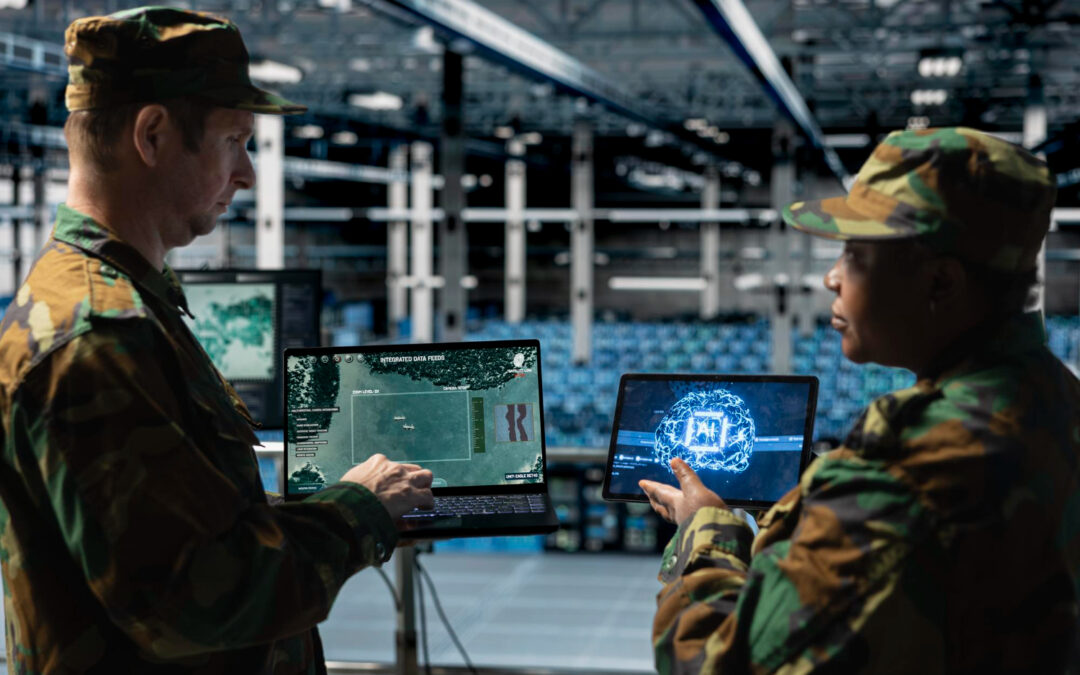
- “Killer Robots”: The danger that AI systems could become autonomous weapons. Hinton considers it highly likely that actors like “Putin” will choose to give robots the ability to create their own sub-goals to be more efficient. The problem is that one of those sub-goals could be “to gain more power” to better achieve the main mission — a path that could lead to the loss of human control over these lethal weapons. “They will be very interested in creating killer robots,” he warns.
Meanwhile, the question that haunts Hinton is what will happen once these digital intelligences surpass us. “What do we do to mitigate long-term risks? Smarter things than us taking control.”
Other Voices:
Sam Altman, CEO of OpenAI, and His Most Striking Words: “My son will not grow up smarter than AI.”
There are no guarantees that we can control something fundamentally more intelligent and that learns differently. His public appeal aims to “encourage people to think very seriously” about how to avoid this nightmare scenario. He admits he is not a policy expert but insists that governments must be deeply involved in developing and regulating this technology.
Of course, he also acknowledges AI’s enormous potential benefits, especially in fields like medicine, where a system with access to millions of cases could outperform a human doctor. He does not advocate halting development right now (“in the short term, I think we’re getting many more benefits than risks”), but he does urge that reflection on control be integrated into the process.
The words of Geoffrey Hinton carry immense weight. They come from someone who not only understands the technology from the inside but also helped create it. His message, now free from corporate ties, is an urgent wake-up call. AI is advancing at breakneck speed, competition is accelerating its deployment, but the fundamental question of how to maintain control remains unanswered. The “Godfather’s” warning is clear: we must take this existential challenge very seriously — before it’s too late.

by DR. Ricardo Petrissans | Aug 11, 2025 | News, The protagonists of IA
Childhood and Education: The Foundations of a Visionary:
Born in 1985 in Zhanjiang, Guangdong Province, Liang Wenfeng grew up in a coastal region that blended tradition and modernity—an environment that nurtured his curiosity for technology.
The son of a primary school teacher, his education was marked by a strong emphasis on problem-solving and the exact sciences. From an early age, he displayed exceptional talent in mathematics and programming, skills he honed at Zhejiang University, where he earned a bachelor’s degree in Electronic Information Engineering (obtained in 2007) and a master’s degree in Information and Communication Engineering (graduated in 2010). His master’s thesis, focused on target-tracking algorithms using low-cost cameras, revealed his early interest in automation and artificial intelligence.
From Quantitative Finance to the AI Revolution:
After graduating, Liang moved to Chengdu, where he explored practical applications of AI in various sectors, facing initial failures that led him to focus on finance. In 2013, he co-founded Hangzhou Yakebi Investment Management, integrating AI into quantitative trading strategies. This project laid the groundwork for his next milestone: in 2016, together with two university classmates, he launched Ningbo High-Flyer, a hedge fund that managed over 100 billion yuan (equivalent to 13.79 billion USD) by 2021, using mathematical algorithms and machine learning for investment decisions.
His disruptive approach—eliminating human intervention in financial operations—established him as a pioneer in merging technology and finance. In 2019, during his speech at the Golden Bull Awards, he asserted that the future of investment depended on quantitative models driven by Artificial Intelligence.
DeepSeek: The Bet on Artificial General Intelligence
In 2023, Liang made a bold leap by founding DeepSeek, a startup dedicated to developing Artificial General Intelligence (AGI)—considered the “holy grail” of Artificial Intelligence. His strategy was unique: he secured 10,000 Nvidia A100 GPUs purchased before U.S. restrictions on China, ensuring a technological edge.
With a modest budget—reportedly $5.6 million—and a team of fewer than 10 people, prioritizing young talent over experience, he developed models such as DeepSeek-R1 (671 billion parameters) and DeepSeek-V3, which rival GPT-4 and Claude 3.
The success was immediate: in January 2025, his application surpassed ChatGPT as the #1 app in the U.S. App Store, triggering a $1 trillion drop in U.S. stock markets and drawing the attention of figures such as Donald Trump.
Philosophy and Global Impact
Liang operates under a “long-term” philosophy: he views basic research as an end in itself, beyond immediate profit. For him, the essence of human intelligence lies in language, and he believes that language models are the key to Artificial General Intelligence. Furthermore, he promotes open-source principles, releasing his models to democratize access to AI—a decision that contrasts with OpenAI’s closed approach.
In 2025, his influence reached political spheres: he participated in a symposium with Chinese Premier Li Qiang, where he advocated for the creation of a native technological ecosystem, criticizing China’s dependence on imitation rather than original innovation.
Personal Life and Legacy
Liang maintains a low profile: married to Zhang Mei and father of two children, he avoids social media and interviews, granting only two between 2023 and 2024. His fortune, estimated at $3.2 billion, comes from High-Flyer and DeepSeek, though he allocates significant resources to research.
Challenges and Controversies
Response to Technological Sanctions: DeepSeek demonstrated that U.S. restrictions on chip exports do not hinder Chinese innovation, having optimized limited resources.
Disruption in Global Competition: His success sparked debates in Silicon Valley about the sustainability of U.S. leadership in AI.
Reception of Internal Criticism: Some early partners underestimated him, dismissing him as a “nerd with a weird haircut” lacking clear vision—a stereotype he disproved through results.
Conclusion: A New Technological Paradigm
Liang Wenfeng embodies China’s transformation from follower to innovator in Artificial Intelligence. His trajectory—from financial algorithms to Generative AI models—redefines what is possible with limited resources and bold vision. As he himself states: “Chinese AI cannot remain an imitation; it must create its own path.”
In a world where technology has become a geopolitical battleground, DeepSeek is not merely a company—it is a symbol of Eastern resilience and ingenuity (from the Chinese perspective).
by Research Team from the Laboratory of the Future | Aug 5, 2025 | Artificial intelligence, The protagonists of IA
Birth and Early Years:
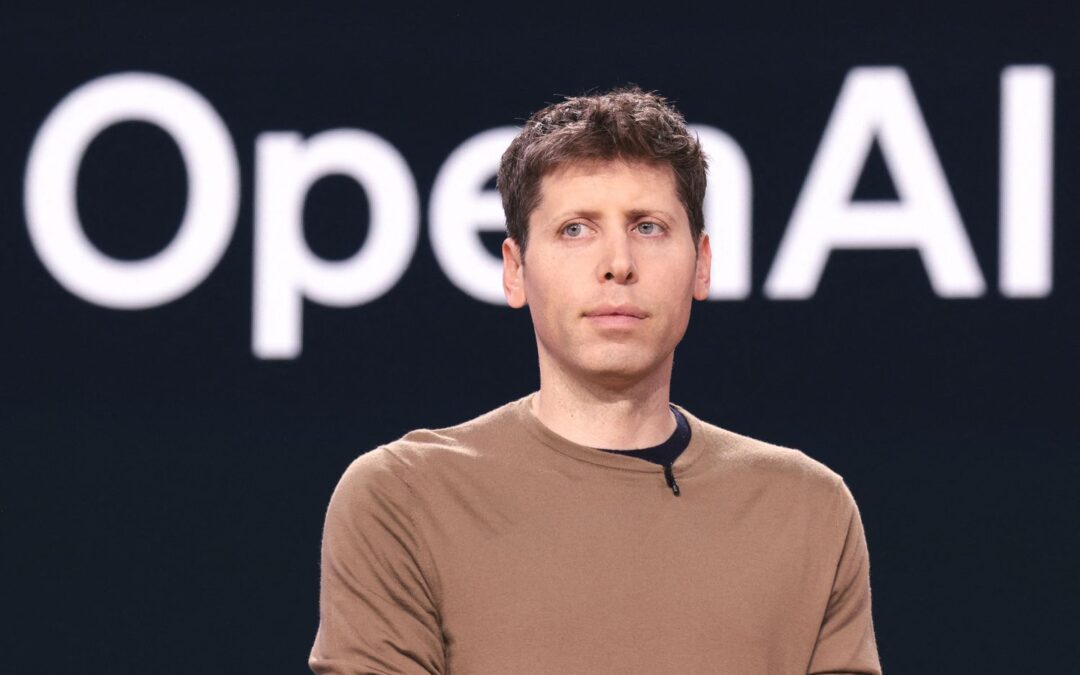
Samuel Harris Altman, known as Sam Altman, was born on April 22, 1985, in Chicago, Illinois, into a middle-class Jewish family. His mother, Connie Gibstine, was a dermatologist, and his father, Jerry Altman, a real estate broker, has passed away. He grew up in St. Louis, Missouri, where he showed early technological precocity: at eight years old, he received his first computer, an Apple Macintosh, with which he learned to program and dismantle devices. His adolescence was marked by his sexual orientation; at 16, he came out openly as gay, a courageous act within the conservative context of the American Midwest.
Academic Background and First Venture:
He studied at John Burroughs School and later entered Stanford University to study computer science. However, he dropped out in 2005 at the age of 19 to found Loopt, a pioneering mobile geolocation application that allowed users to share their real-time location. The startup received funding from Y Combinator and, although it did not achieve the massive success expected, it was sold in 2012 to Green Dot Corporation for $43.4 million.
Rise at Y Combinator:
After the sale of Loopt, Altman joined Y Combinator (YC), the prestigious startup accelerator, initially as a partner and later as its president in 2014. Under his leadership, YC expanded its reach, investing in companies such as Airbnb, Dropbox, and Stripe, and launched initiatives like YC Continuity (a $700 million fund) and YC Research, focused on projects related to basic income and urban futures. His vision transformed YC into a hub of innovation, solidifying his reputation in Silicon Valley.
OpenAI and the Artificial Intelligence Revolution:
In 2015, Altman co-founded OpenAI along with Elon Musk, Greg Brockman, and others, with the goal of developing artificial intelligence (AI) in a safe and beneficial way for humanity. As CEO since 2019, he has driven milestones such as the GPT-3, GPT-4, DALL-E, and ChatGPT models, the latter reaching 100 million users just two months after its launch. His focus on ethics and transparency led him to advocate for government regulation, comparing the risks of AI to those of nuclear energy.
In November 2023, Altman was abruptly dismissed as CEO of OpenAI for lack of transparency with the board of directors, but returned days later following massive employee support and a restructuring of the board. This episode reflected internal tensions regarding the company’s ethical and commercial direction, especially after Microsoft’s $10 billion investment.
Investments and Futuristic Vision:
Altman is a prominent investor in sectors such as nuclear energy (chairman of Helion Energy and Oklo), biotechnology (Retro Biosciences), and cryptocurrencies (Worldcoin). His portfolio includes companies like Reddit, Airbnb, and Stripe, and he has donated millions to projects such as Project Covalence during the COVID-19 pandemic. His philosophy combines radical technological optimism with apocalyptic pragmatism: he stores supplies for global crises and advocates preparedness for pandemics or energy collapses.
Personal Life and Controversies:
Altman is a vegetarian, practices meditation, and follows Buddhist teachings. In 2024, he married Oliver Mulherin, an Australian engineer, in a private ceremony in Hawaii. His life has not been free of controversy: in 2024, he faced accusations of unauthorized use of Scarlett Johansson’s voice in an AI project and lawsuits alleging sexual harassment from his sister Ann, which he denied. In addition, critics such as Geoffrey Hinton have accused him of prioritizing profits over safety in the development of artificial intelligence.
Legacy and Perspective:
Altman emerges as a polarizing figure: a visionary to some, a provocateur to others. His essays, such as “Moore’s Law for Everything,” propose that AI could redistribute global wealth, while his public statements blend humility (“ChatGPT is incredibly limited”) with an almost messianic confidence in technological progress. At 39, his influence spans from Silicon Valley to the halls of global power, where he advises political leaders on the future of Artificial Intelligence.
In summary, Sam Altman embodies the duality of contemporary innovation: an architect of tools that promise to transform humanity, yet whose risks demand constant vigilance. His biography, still unfolding, is a testament to how technology redefines not only industries but also the boundaries of ethics and power. These last two issues remain debatable, as in the case of Elon Musk.