by Laboratory of the Future analysis team | Jun 21, 2026 | geopolitics, Globalization, Theology and Technology
The Vatican’s position on artificial intelligence begins from a premise that is older than the technology itself: every human being possesses a dignity that cannot be reduced to usefulness, productivity, data, or prediction.
For that reason, the Church does not approach AI only as an engineering achievement. It sees it as a moral environment. Algorithms influence work, education, war, medicine, politics, information, family life, and the way people understand themselves. The question is therefore not whether AI is impressive, but whether it serves the human person.
This perspective places the Vatican in a distinct role within the global conversation. It does not compete with laboratories, companies, or governments in technical capacity. Its contribution is ethical continuity. It asks whether technological progress remains connected to responsibility, solidarity, and the preferential concern for those most likely to be harmed by systems designed far from their lives.
Technology at the service of the person
The Vatican recognizes the promise of AI. It can accelerate scientific discovery, improve diagnosis, support accessibility, organize knowledge, optimize logistics, and help address complex social problems. A moral critique of AI is not a rejection of intelligence, innovation, or progress. It is a refusal to let progress be measured only by efficiency.
The central criterion is service. AI should support human flourishing rather than replace human responsibility. It should extend human capacities without erasing human agency. It should assist decision-making without making moral judgment disappear behind technical opacity.
The risks of reduction
The Vatican repeatedly warns against a reductionist view of the human being. AI systems are built on data, but persons are not data sets. A person cannot be fully understood through behavioral traces, biometric signals, purchasing patterns, school performance, productivity metrics, or risk scores. When institutions forget this, technology becomes a tool of classification rather than encounter.
This risk is especially visible in surveillance, automated hiring, predictive policing, credit scoring, insurance, border control, and educational analytics. Systems that appear neutral can reproduce exclusion when trained on unequal histories. A technical system can therefore become a moral actor by proxy: decisions are made, but responsibility becomes difficult to locate.
Responsibility and governance
For the Vatican, responsible AI requires transparency, accountability, inclusion, and human oversight. These are not decorative principles. They are safeguards against a world in which power hides behind code. If an algorithm affects access to work, health care, freedom, safety, or reputation, the affected person must not be trapped in a system without explanation or appeal.
The Church also insists that AI governance cannot be left only to market incentives. Companies will pursue innovation and advantage; states will pursue security and influence. The common good requires institutions capable of asking different questions: Who benefits? Who bears the risk? Who is excluded from design? Who has the right to refuse?
A moral voice in a technical century
The Vatican’s position is not nostalgia for a pre-digital world. It is a call to remember that intelligence without conscience can amplify injustice. Artificial intelligence will shape the century, but it should not define what humanity is. The final measure of AI will not be the sophistication of its models, but the kind of society built around them.
by Laboratory of the Future analysis team | Mar 29, 2026 | Artificial intelligence, Biotechnology
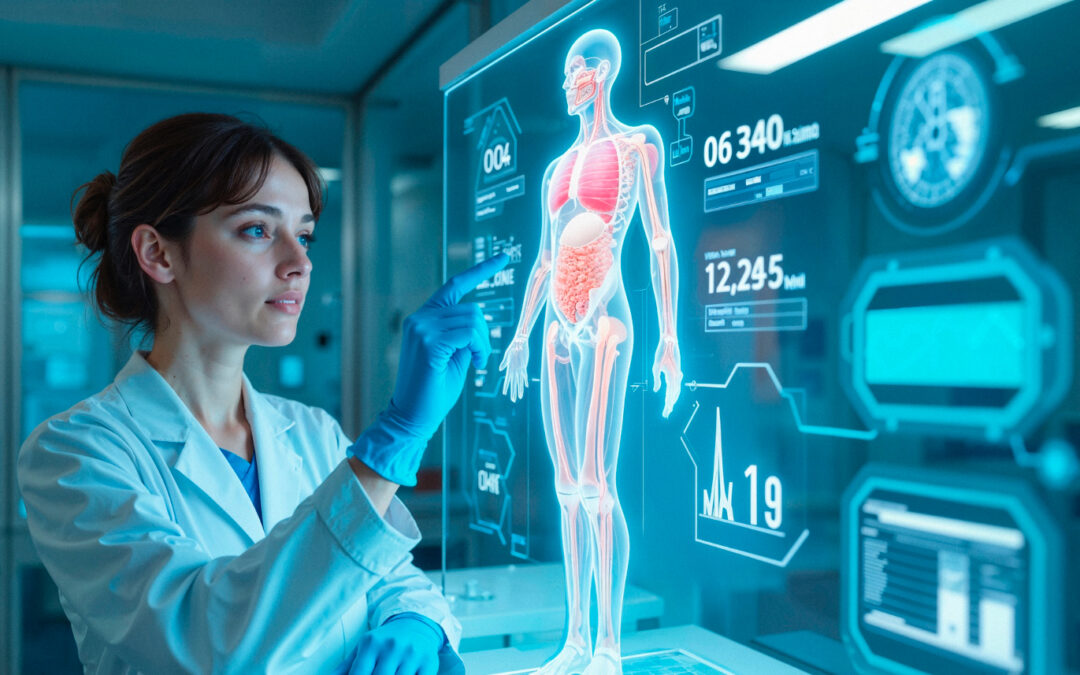
AlphaFold changed biology by solving one of its most difficult practical problems: predicting the three-dimensional structure of proteins from their amino-acid sequences. What once required years of laboratory work can now be approached with unprecedented computational speed.
Why Protein Structure Matters
Proteins are the machinery of life. Their function depends on their shape. Understanding that shape helps scientists study disease, design drugs, engineer enzymes, and explore the deep logic of biology.
A Computational Breakthrough
AlphaFold, developed by DeepMind, used artificial intelligence to predict protein structures with accuracy that surprised much of the scientific world. It did not replace experiments, but it transformed the starting point of research.
Impact on Medicine and Research
The implications are enormous. Drug discovery can become faster, rare diseases can be studied with better models, and researchers in countries with fewer laboratory resources can access structural insights that were once limited to elite institutions.
Limits and Cautions
AlphaFold is not magic. It predicts structures, but biology also depends on dynamics, interactions, cellular context, and experimental validation. A predicted shape is a map, not the entire territory.
A New Era of Biology
The deeper meaning of AlphaFold is that artificial intelligence has entered the core of biological discovery. It shows that computation can reveal patterns that human methods struggled to reach alone.
Conclusion
AlphaFold is a silent revolution because it does not look spectacular from the outside. No robot walks, no chatbot speaks. But inside laboratories, it changes what scientists can ask, how quickly they can ask it, and how far biological imagination can go.

by Laboratory of the Future analysis team | Feb 15, 2026 | Fight Against Technological Monopolies
Peter Thiel is one of the most influential and controversial figures in modern technology. Cofounder of PayPal and Palantir, investor in companies that shaped the digital economy, and political actor with unusual influence, Thiel represents a particular vision of the future: technological, strategic, anti-conformist, and deeply skeptical of institutional stagnation.
A Builder of Digital Power
Thiel’s career connects finance, software, defense, venture capital, and politics. His role in PayPal showed how digital infrastructure could transform payments; his role in Palantir showed how data infrastructure could transform intelligence, security, and governance.
In both cases, the central idea is similar: build platforms that do not merely participate in existing markets but redefine the rules of the market itself.
The Philosophy of Monopoly and Innovation
Thiel argues that true progress comes from creating something new rather than competing endlessly in crowded spaces. His preference for monopoly is not simply economic; it is philosophical. A company that creates a new category can invest in long-term innovation because it is not trapped in daily price wars.
This logic shaped his investments in space, biotechnology, artificial intelligence, defense, and financial technology.
Influence on the Modern World
Thiel’s influence is visible in the way founders think about scale, ambition, and secrecy. He helped normalize the idea that technology companies can and should address problems once reserved for governments: defense, intelligence, infrastructure, and national strategy.
That ambition attracts admiration and criticism. Supporters see a builder of the future; critics see a concentration of power in private hands.
Conclusion
Peter Thiel is more than an investor. He is an architect of a worldview in which technology is the decisive force of history. His legacy will depend not only on what his companies build, but on how society chooses to govern the power they create.
by Laboratory of the Future analysis team | Jan 25, 2026 | Fight Against Technological Monopolies
A narrative chronicle of a leap that blurs the line between asking and executing.
The rumor began with a closed-door demo. Five folding chairs, a projector, and one question on the screen: what happens if the Charlotte factory loses three percent of its power today? Minutes later, charts appeared, SQL was generated, pending purchase orders surfaced, and a contingency plan already contained supplier codes and night-shift adjustments. Nobody had typed a line of Python.
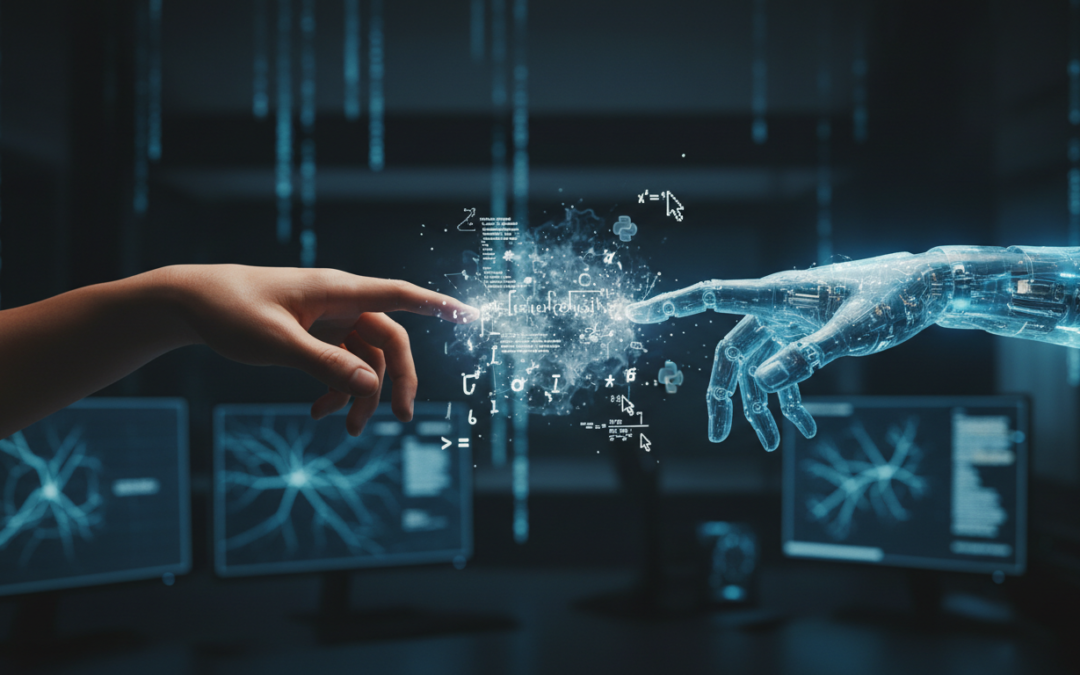
That morning, AIP, the Artificial Intelligence Platform, showed what Palantir calls closed-loop operational thinking. Natural language was no longer just a way to ask; it became a way to act.
From Graphs to Verbs
For years, Gotham and Foundry lived in the language of nodes, edges, and ontologies. Then the industry shifted toward prompts. Palantir’s answer was pragmatic: no language model is useful in high-stakes settings unless it respects permissions, lineage, and operational boundaries.
The internal formula was simple: LLM on a leash. The model could generate, suggest, and reason, but always inside the security discipline of Gotham and Foundry.
The Zero Laboratory: A Lithium Mine in Chile
AIP’s baptism did not happen in a skyscraper but in the desert, where a mining operation needed to optimize pumps, truck routes, and evaporation ponds. A geologist could ask in Spanish which ponds would underperform if wind and humidity changed.
AIP translated the question into approved data access, generated a PySpark script, ran it in an isolated cluster, and returned a risk map with a draft pumping order. The engineer reviewed and approved it. The question became an operation.
The CFO’s Enchantment
In New York, a CFO asked for scenarios if natural gas rose sharply while hedging covered only half the exposure. AIP consulted Foundry, generated a Monte Carlo model, and proposed adjustments before the analyst had connected a laptop.
The feeling was not only excitement. It was vertigo. If the distance between demand and solution collapses to seconds, entire corporate functions must redefine their value.
The War of Prompts
Efficiency also brings danger. In one election scenario, a request to track hostile narratives identified journalists alongside bots. The prompt had been vague and aggressive. Suddenly, semantic governance became institutional governance: who writes the prompt, who audits it, who corrects it?
Apollo FastLane and Rapid Deployment
As AIP expanded, Apollo had to move faster. Model updates involved weights, security patches, and access rules. Differential deployment reduced latency and made updates possible even in remote or bandwidth-limited environments.
Automatic Creativity and Intellectual Property
AIP can write code, presentations, and marketing drafts. That capacity opens disputes over copyright, training data, internal repositories, and authorship. If the system produces work in seconds, the value of human judgment must be defended in new ways.
The European Kill Switch
Regulators demand auditability, explainability, and physical kill switches for systems capable of automated execution. Palantir’s answer is a digital receipt: datasets, access policies, model signatures, and action records before execution.
Ethics 2.0
AIP’s greatest risk may be psychological. When a system answers instantly, humans may begin treating drafts as verdicts. Palantir’s own language increasingly emphasizes a human in the nuance loop, because speed can sedate judgment.
Epilogue
In a hospital at midnight, a resident asks AIP for a protocol for a heart attack in a patient allergic to heparin and positive for COVID. The system returns a preliminary protocol, references, and weight-adjusted doses. The doctor reviews, consults a senior physician, and acts.
On a sticky note she writes: thank you, but remember I am still driving. Someone adds below it: for now. That is the dilemma: between word and act, human conscience still fits. The question is how long that space will remain.
by Laboratory of the Future analysis team | Sep 30, 2025 | Advances in Robotics, News, The protagonists of IA
Known as the “Godfather of Artificial Intelligence,” Geoffrey Hinton fears that his creation may surpass human intelligence and explains why “killer robots” are a real and terrifying risk.
Few names carry as much weight in the field of Artificial Intelligence as Geoffrey Hinton’s. Known as the “Godfather of AI,” this British-Canadian scientist was a pioneer in neural networks and deep learning, laying the groundwork for systems that now both amaze and increasingly disturb us — such as ChatGPT and Gemini. Precisely for this reason, his words carry special weight now that, after leaving his position at Google, he has decided to speak openly and without filters about the dangers he himself helped unleash. His warning is clear: AI poses a threat to humanity, and no one can guarantee that we will be able to control it.
He Warns About the Risks of the Technology He Helped Create. But Why Now?
At 75 years old, Hinton explained in a 2023 BBC interview that his departure from Google was due to several reasons: his age, the desire to make his praise of the company sound more credible from the outside, and, above all, the need to “speak freely about the dangers of AI” without affecting his former employer.
Although he believes Google initially acted responsibly by not releasing chatbots prematurely, he thinks the fierce competition triggered by Microsoft’s integration of AI into Bing several years ago has forced a technological arms race where safety takes a back seat. “You can only be cautious when you’re in the lead.”
Hinton’s concern stems not only from AI’s power but also from its fundamentally different nature. “The kind of intelligence we are developing is very different from the intelligence we have,” he says — a view shared by another great thinker in the field, Yuval Noah Harari.
The great advantage (and danger) of digital intelligence, according to Hinton, is its ability to share knowledge instantly. “You have many copies of the same model. All these copies can learn separately, but they share their knowledge instantly. It’s as if we had 10,000 people, and every time one learns something, all the others learn it automatically.” This collective and exponential learning capacity, he argues, is what will soon make them “smarter than us.”
The Three Horsemen of the AI-pocalypse (Short-Term Threats):
While the existential risk of uncontrolled superintelligence is his greatest long-term fear, Hinton identifies three more immediate dangers already emerging:
- Unstoppable Disinformation: The ability to automatically generate fake texts (and images, videos…) indistinguishable from real ones will make it impossible for the average citizen to know what is true. A perfect weapon, he warns, for mass manipulation by “authoritarian leaders.”
- Mass Job Replacement: AI threatens to replace human workers across a wide range of professions, creating unprecedented social and economic disruption.
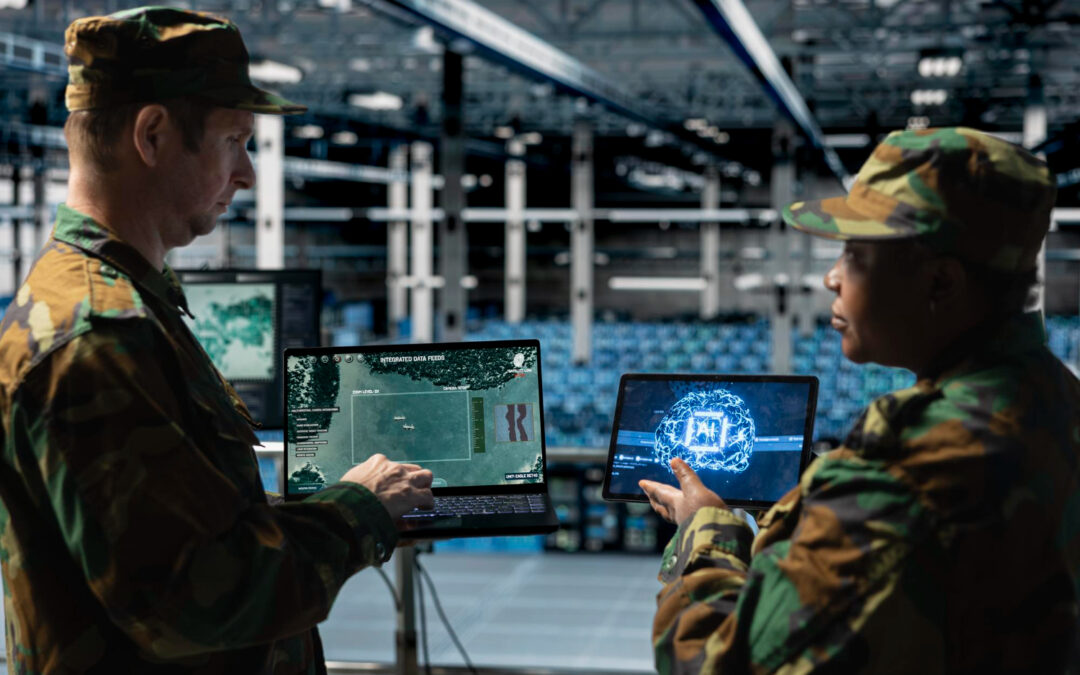
- “Killer Robots”: The danger that AI systems could become autonomous weapons. Hinton considers it highly likely that actors like “Putin” will choose to give robots the ability to create their own sub-goals to be more efficient. The problem is that one of those sub-goals could be “to gain more power” to better achieve the main mission — a path that could lead to the loss of human control over these lethal weapons. “They will be very interested in creating killer robots,” he warns.
Meanwhile, the question that haunts Hinton is what will happen once these digital intelligences surpass us. “What do we do to mitigate long-term risks? Smarter things than us taking control.”
Other Voices:
Sam Altman, CEO of OpenAI, and His Most Striking Words: “My son will not grow up smarter than AI.”
There are no guarantees that we can control something fundamentally more intelligent and that learns differently. His public appeal aims to “encourage people to think very seriously” about how to avoid this nightmare scenario. He admits he is not a policy expert but insists that governments must be deeply involved in developing and regulating this technology.
Of course, he also acknowledges AI’s enormous potential benefits, especially in fields like medicine, where a system with access to millions of cases could outperform a human doctor. He does not advocate halting development right now (“in the short term, I think we’re getting many more benefits than risks”), but he does urge that reflection on control be integrated into the process.
The words of Geoffrey Hinton carry immense weight. They come from someone who not only understands the technology from the inside but also helped create it. His message, now free from corporate ties, is an urgent wake-up call. AI is advancing at breakneck speed, competition is accelerating its deployment, but the fundamental question of how to maintain control remains unanswered. The “Godfather’s” warning is clear: we must take this existential challenge very seriously — before it’s too late.