by DR. Ricardo Petrissans | May 17, 2026 | The protagonists of IA
The image of poisoned water captures a fear at the center of the AI economy: what if the system produces wealth while making human labor less necessary, less valued, and less politically powerful?
Capital without Labor
AI promises companies a way to scale production with fewer people. Investors see efficiency. Workers see a future in which wages may no longer be the main channel through which productivity is shared.
The Role of Financial Power
When asset managers and technology firms converge around automation, the question becomes structural. Who owns the machines? Who receives the productivity dividend? Who carries the social cost of displacement?
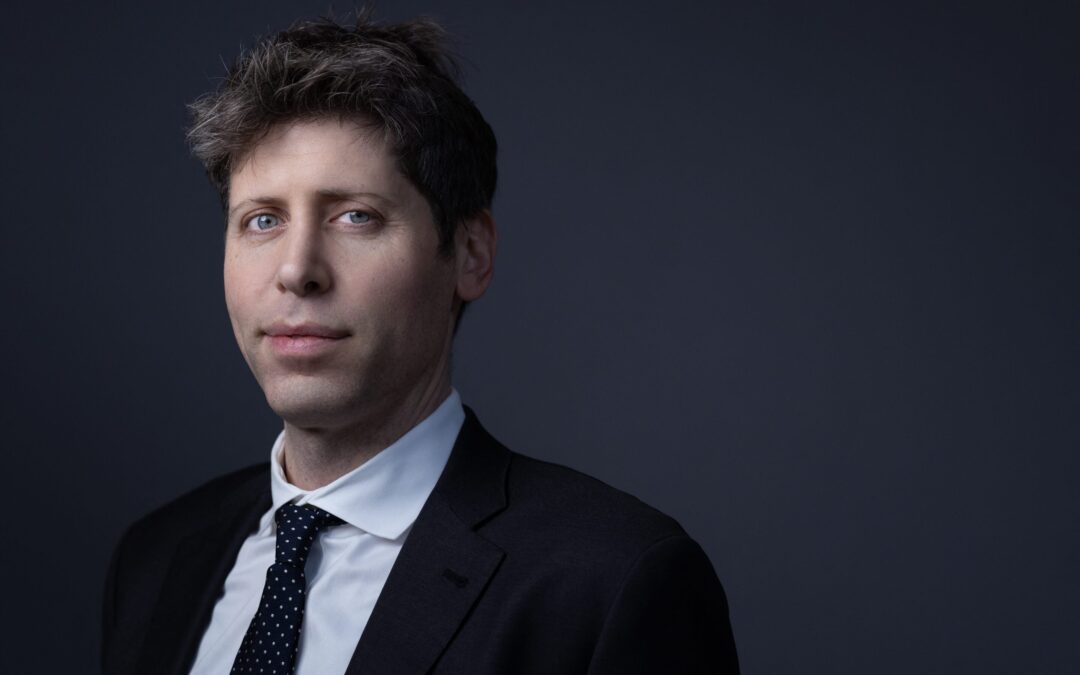
Sam Altman’s Paradox
Altman often speaks about abundance, universal basic income, and the need to redesign social systems. The paradox is that the same technologies creating abundance may destabilize the employment model before new institutions are ready.
Conclusion
Capitalism without humans is not literally empty of people. It is a capitalism where people matter less as workers than as users, data sources, consumers, or political afterthoughts. That is the poisoned water beneath the promise of abundance.
by DR. Ricardo Petrissans | May 10, 2026 | The protagonists of IA, Theology and Technology
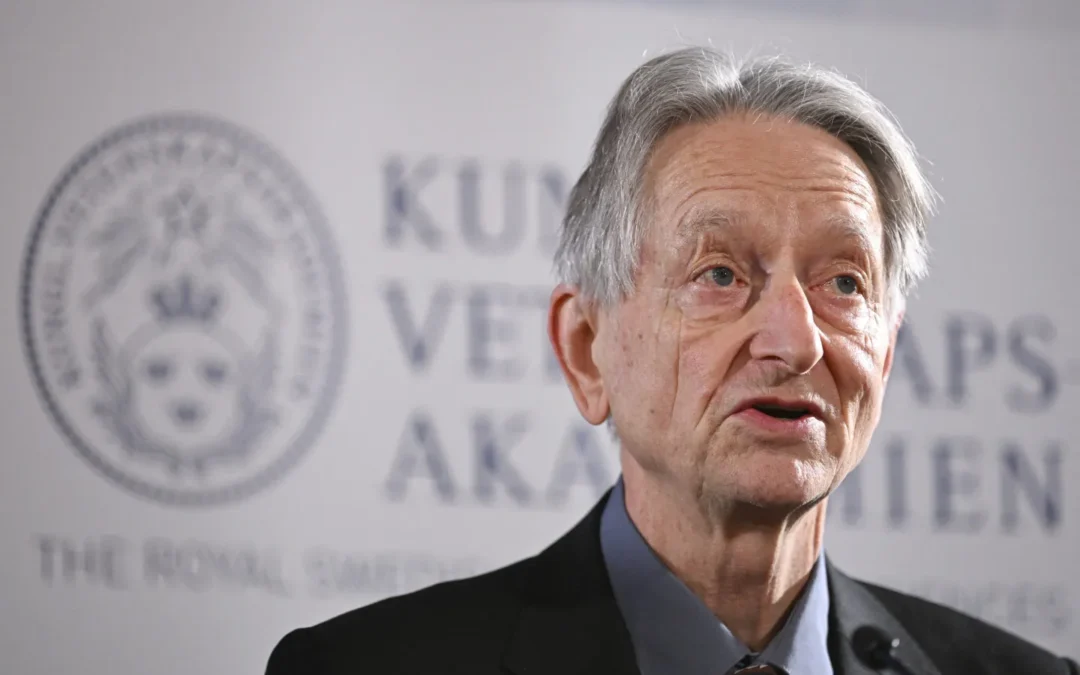
Geoffrey Hinton’s warnings about AI are not warnings against intelligence itself. They are warnings about abundance without governance: abundant synthetic labor, abundant persuasion, abundant automation, and abundant power in systems few people fully understand.
The Paradox of Success
The better AI becomes, the more society wants to use it everywhere. But success creates dependency. When systems write, advise, code, design, persuade, and decide, the cost of error rises with adoption.
Abundance and Displacement
AI can produce more text, more software, more analysis, more images, and more automation. Yet abundance in output can mean scarcity in employment, attention, trust, and institutional control.
The Alignment Problem in Public Life
Hinton’s concern extends beyond technical alignment. The social question is whether institutions can adapt fast enough to govern tools that evolve faster than law, education, and labor markets.
Conclusion
The price of abundance is responsibility. If AI multiplies capability, society must multiply oversight, resilience, and humility at the same time.

by DR. Ricardo Petrissans | May 3, 2026 | Fight Against Technological Monopolies, The protagonists of IA
Fei-Fei Li’s work reminds us that intelligence is not only linguistic. Humans understand the world through bodies, space, vision, movement, and context. If artificial intelligence remains trapped in text, it remains incomplete.
From Words to Worlds
Large language models changed how machines handle symbols. But the physical world is not a document. It has depth, occlusion, force, risk, and embodied action. Spatial intelligence is the bridge from conversation to reality.
The Importance of Vision
Li’s contributions to computer vision helped make visual recognition a central part of AI. Seeing is not passive. It is a way of structuring attention, identifying relationships, and preparing action.
Robots and Embodied AI
The next frontier is intelligence that can operate in kitchens, hospitals, warehouses, streets, and laboratories. That requires models that understand not only what objects are, but where they are, how they move, and what humans intend around them.
Conclusion
Beyond language lies the intelligence of space. Fei-Fei Li’s perspective helps correct the illusion that thinking is only text. Real intelligence must eventually meet the physical world.

by DR. Ricardo Petrissans | Apr 19, 2026 | The protagonists of IA
Elon Musk’s image of work as a garden rather than an obligation belongs to a larger debate about abundance, automation, and meaning. If machines produce more of what humans need, what becomes of work as identity, discipline, and social structure?
The Post-Scarcity Question
Musk often speaks from a horizon where AI and robotics make many forms of labor optional. In that future, work becomes less about survival and more about preference, craft, status, or purpose.
The Garden Metaphor
A garden requires care, rhythm, and attention. It is productive, but not in the same way as a factory. To imagine work as a garden is to imagine human activity as cultivation rather than coercion.
The Hidden Problem
The transition is not automatic. If automation removes wages before society builds new institutions, freedom from work can become exclusion from income. The garden can become a privilege for those who own the machines.
Conclusion
Musk’s metaphor is powerful because it points to a possible future of voluntary creativity. It is incomplete because it does not solve distribution, dignity, or the social role of work.

by DR. Ricardo Petrissans | Apr 12, 2026 | The protagonists of IA
Dario Amodei’s warnings about artificial intelligence point toward a profound transformation of white-collar work. The threat is not always dramatic replacement. Often it is quieter: compression of tasks, shrinking of teams, and automation of the cognitive middle layer.
The New Target of Automation
For decades, automation was associated with factories, logistics, and repetitive manual work. Generative AI changes the center of gravity. Reports, summaries, coding, legal drafts, analysis, customer support, and management routines can now be partially automated.
The Silent Tsunami
The change may arrive without a single dramatic announcement. A company may keep the same products while needing fewer analysts. A department may produce more output with fewer juniors. A manager may rely on AI drafts before asking a team. The labor market shifts under familiar job titles.
Productivity and Anxiety
AI may raise productivity, but productivity does not automatically translate into secure employment. If the same work can be done by smaller teams, the gains may flow to firms and shareholders before workers.
Conclusion
Amodei’s warning is useful because it refuses easy optimism. White-collar work is not immune to automation; it is becoming one of its main laboratories.

by Equipo técnico del Laboratorio del Futuro | Mar 1, 2026 | Fight Against Technological Monopolies, geopolitics, Technofeudalism, The protagonists of IA
Peter Thiel’s relationship with the new right is one of the most debated aspects of his public life. His political giving, public statements, and support for unconventional candidates reveal an effort to reshape conservatism around technology, state power, and elite rebellion.
A Different Conservatism
The new right differs from older conservative traditions. It is more skeptical of globalization, more willing to use state power, and more focused on cultural conflict and institutional capture. Thiel’s critique of stagnation and bureaucracy fits naturally into that environment.
Actions and Influence
Thiel has funded candidates and ideas that challenge the Republican establishment. His influence comes not only from money but from prestige: he represents the possibility that Silicon Valley talent can align with a post-liberal political project.
That alignment worries critics, who see the risk of technology billionaires using democratic systems to weaken democratic norms.
Consequences
The consequences are still unfolding. Thiel helped open a path for technology figures to intervene directly in ideological politics. Whether this produces renewal or deeper polarization depends on how those ideas are translated into policy.
Conclusion
Peter Thiel’s new-right connections are not a side note. They are part of a broader question about the political role of technology elites in a century where digital infrastructure increasingly shapes public life.