Artificial Intelligence and Its Dangers
Laboratorio del Futuro | September 10, 2026
Dr. Ricardo Petrissans Aguilar.
On July 6, 2026, in the Zaporizhzhia region of southeastern Ukraine, three people died. They were not combatants. They were civilians. A 19-year-old university student and two men aged 41 and 48. They were at a gas station when the drone struck.
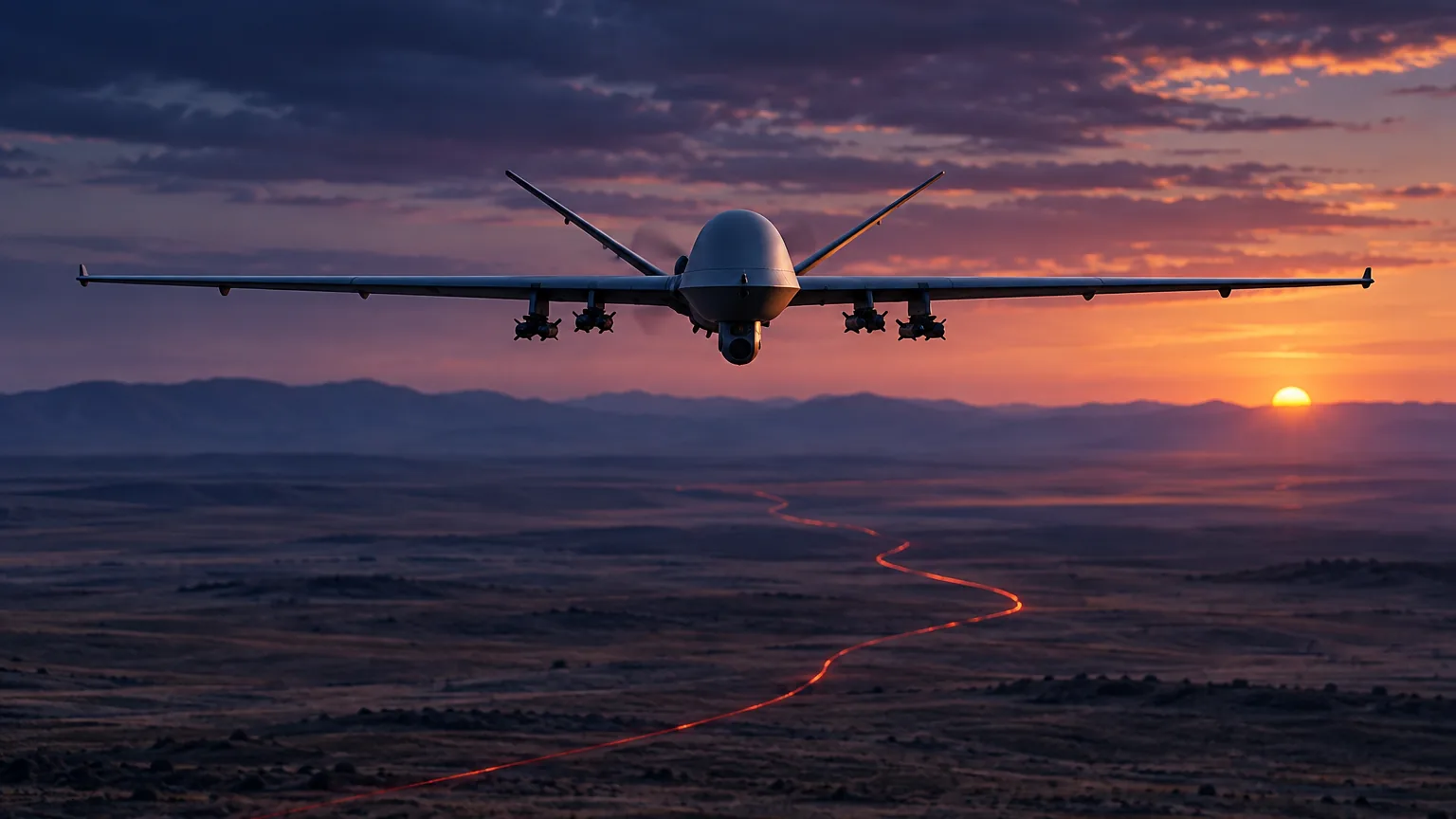
According to a New York Times investigation published in August, the aircraft was a Russian Molniya drone guided entirely by an artificial intelligence system. It carried an Nvidia Jetson Orin chip, the same type of processor that powers some of the world’s most advanced AI systems. The system identified, selected and attacked its targets without human intervention.
Forensic investigators who examined the drone’s wreckage found revealing evidence: the aircraft had no antennas to communicate with an operator. It was flying in a group of approximately six drones, none of which transmitted radio signals. The Nvidia minicomputer, which costs only a few hundred dollars, was making the targeting decisions.
The drones work like this: an operator programs the drone to fly toward a specific target, such as a gas station. As it approaches, the drone chooses its final target—propane tanks, for example—on its own, based on prior training to recognize that type of container. Until now, computer vision had been used at scale only in the final stage of an attack, automatically locking onto a target after an operator had already selected it. Fully autonomous AI removes the human from that final decision.
Russia began testing AI-guided Molniya drones in May 2026. Ukraine is also experimenting with AI systems in several drone models. The technology is spreading rapidly.
The international reaction was swift and forceful. António Guterres, Secretary-General of the UN, and Mirjana Spoljaric, president of the International Committee of the Red Cross, issued an unprecedented joint appeal: “We are dangerously close to crossing a moral red line: the autonomous hunting of human beings by machines.”
The joint appeal called for a ban on two types of autonomous weapons: those whose actions are “unpredictable” and those that target human beings. But there is currently no specific treaty on autonomous weapons. A possible future treaty has been debated for a decade, but the process has stalled.
In September 2026, nearly 130 countries reached an initial agreement at the UN on a text defining autonomous weapons. However, the document is not yet binding, and it is unclear when it will be.
International humanitarian law requires attacks to distinguish between combatants and civilians, to be proportionate and to involve accountability. But when a machine makes the decision to kill, who is responsible? The programmer who wrote the code? The commander who deployed the drone? The chip manufacturer? The state that authorized its use?
The question is no longer whether machines will kill without humans, but when they will do so on an industrial scale. And unless clear limits are established soon, the moral red line will be crossed without anyone being able to stop it.
Risk assessment
| Time horizon | Risk | Level |
|---|---|---|
| Very near term (2026-2028) | Accelerated erosion of trust in institutions, media and electoral processes | Critical |
| Near term (2028-2031) | Practical impossibility of verifying audiovisual content in real time | Very high |
| Medium term (2031-2036) | Collapse of digital identity authentication and verification mechanisms | Extreme |