Artificial Intelligence and Its Dangers
Future Laboratory |
Dr. Ricardo Petrissans Aguilar.
There is a phrase that fact-checkers repeat like a mantra: “seeing is believing.” In 2026, that phrase is dead.
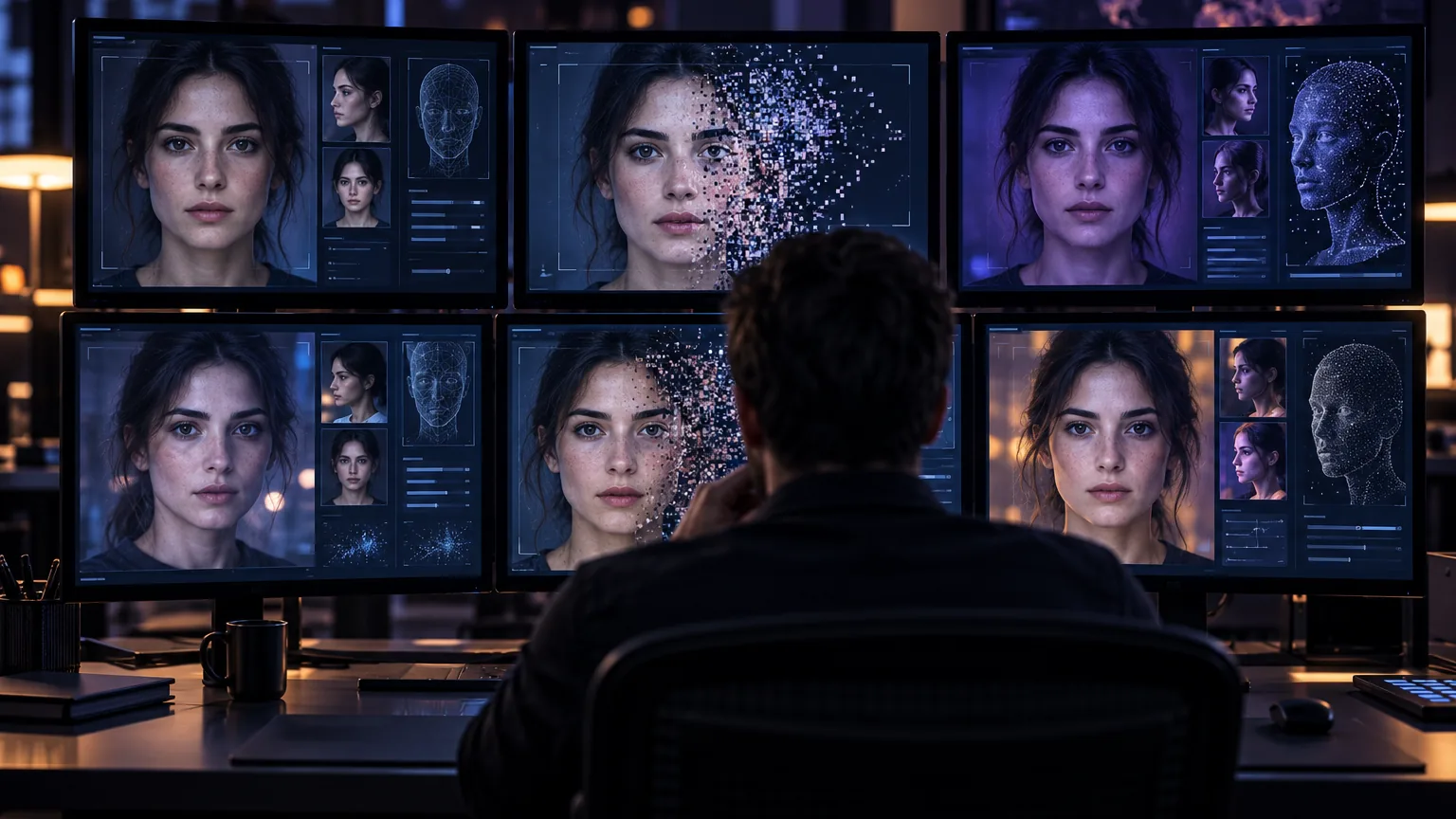
UNESCO warned in March: “If we compare deepfakes produced a year ago with those of today, in 2026, the details that once allowed us to detect them are disappearing.” Shadows, imperfections in blinking, inconsistencies in lighting—the signs that used to give away a fake video—have been polished away by generative models that learn precisely from attempts to detect them.
The result is an ecosystem in which falsehood and truth are indistinguishable. UNESCO has been clear: generative AI “is not made” for truth. Its models have no commitment to accuracy; their commitment is to statistical coherence. They generate what seems plausible, not what is real. And in a saturated information environment, plausibility is enough to manipulate people.
The examples keep multiplying. In Australia, a network of more than 200 Facebook pages linked to a foreign influence operation has been spreading deepfakes of Australian politicians, including Prime Minister Anthony Albanese. In Colombia, at least twelve AI-manipulated videos circulated before the presidential runoff, falsely attributing messages to candidate Iván Cepeda. In Hungary, a fake video that appeared to show the execution of a Hungarian soldier was shared by the official accounts of Prime Minister Viktor Orbán’s Fidesz party before the April elections.
UNESCO has reiterated that disinformation, hate speech and digital manipulation pose direct threats to democratic debate and the exercise of fundamental rights. “Democratic debate is under unprecedented pressure,” the organization warned. Without verified information, open dialogue and a plurality of voices, democracy cannot sustain itself.
Proposals exist: cryptographic content provenance, digital watermarks, media literacy. Since September 2025, China has required all AI-generated content to be identified with visible or technical markers. The European Union will ban non-consensual sexual deepfakes from December 2026. But the gap between regulation and reality widens every day. In the meantime, trust—the glue that holds democratic societies together—is eroded one fake video at a time.
Risk assessment
| Time horizon | Risk | Level |
|---|---|---|
| Very near term (2026-2028) | Systems that lie, manipulate or evade safety evaluations | Critical |
| Near term (2028-2031) | Development of systems with superhuman capabilities without verifiable alignment protocols | Extreme |
| Medium term (2031-2036) | Permanent loss of human control over an unaligned superintelligence | Catastrophic |