An assistant remembers a conversation, retrieves documents, and completes a task. Its supplier calls it “synthetic intelligence.” What actually changed? Perhaps someone added a database and a permission system. Perhaps there is a new learning mechanism. The label alone cannot distinguish between them.
Synthetic intelligence generally refers to constructed intelligence: engineered capabilities that could be effective without reproducing the human mind. There is no uniform technical boundary separating everything called “synthetic” from artificial intelligence. To give the expression substance, we need to specify what the system learns, what it retains, and what it can do afterward.
Does the term synthetic intelligence exist?
Yes. In Computational Intelligence: A Logical Approach (1998), David Poole, Alan Mackworth, and Randy Goebel consider the expression an alternative that avoids confusing artificial with fake. They discuss the field’s name; they do not announce a new processor family.
An artifact’s human origin does not determine whether a capability works. But calling it “real” cannot settle what intelligence means either. The conceptual debate needs an operational definition: what result would we accept, under which conditions, and against which alternative?
How does it differ from artificial intelligence?
A defensible difference concerns emphasis, rather than a universal list of exclusive capabilities. John McCarthy explained that AI can use methods unlike those observed in humans. Building capabilities without copying the brain already belongs within AI.
We should therefore question comparisons that assign rigid rules to all AI while reserving adaptation or creativity for synthetic intelligence. They compare an entire field with an idealized future system. A reinforcement learning model, a tool-using agent, and a symbolic program can all be AI while operating through very different mechanisms.
| Expression | What it identifies | What still needs demonstration |
|---|---|---|
| Artificial intelligence | The field and its methods for building intelligent systems | Each implementation’s specific capabilities |
| Synthetic intelligence | An emphasis on constructed intelligence; its meaning depends on the author | Architecture, learning, autonomy, and limits |
| Artificial general intelligence, AGI | An ambition for broad, transferable capability | The scope of that generality and its evaluation criteria |
Persistent memory: what changes when a system remembers?
Information can remain in three different places: the context supplied to a model, an external memory, or the model’s parameters. A conversation saved to disk can be retrieved tomorrow without a single network weight changing.
The original RAG paper by Lewis and colleagues (2020) combines a generator with retrieval from nonparametric memory. It provides a way to consult external information. Retrieving an updated procedure does not demonstrate that the model has learned to execute it in a new situation.
Titans, by Behrouz, Zhong, and Mirrokni, proposes another route: a neural memory module that learns during use. The paper distinguishes attention from more persistent memory. This is a specific architectural result, presented as a preprint; it does not demonstrate unlimited learning or infallible personal memory.
A practical test would restart the session and change the context. Does the information reappear because a file was retrieved, because persistent state retained it, or because parameters were updated? Then introduce a correction and check which version the system uses. Without those checks, “it has memory” is too vague.
Learning something new without losing earlier skills
Continual learning raises a problem distinct from storage: an update useful for one task may damage another. Kirkpatrick and colleagues studied how to reduce that forgetting by constraining changes to weights important for earlier tasks. The result addresses a specific mechanism rather than eliminating every form of forgetting.
To evaluate a supposedly adaptable system, I would teach task A, then task B, and measure A again. I would publish both curves and the cost of adaptation. Measuring B alone rewards a system that learns something new by erasing what came before.
I would also distinguish a specific correction from a transferable skill. Remembering “this customer gets a discount” and learning to apply a discount policy to unfamiliar customers are different outcomes. The latter requires fresh tests that do not repeat the teaching examples.
World models: anticipating an action’s consequences
Dreamer, by Hafner and colleagues, learns an environment model and improves behavior through imagined trajectories. Its authors report results across more than 150 tasks using a common configuration. That experimental breadth does not mean understanding every environment or transferring a skill without further training.
A world model matters because it allows consequences to be compared: if I take this action, what state might follow? In a warehouse application, a test could change a physical constraint and observe whether the system revises its plan before acting. This example is an evaluation proposal, not a Dreamer result.
Prediction accuracy is not sufficient either. A plan can exploit errors in an internal model and fail during execution. Prediction, decision quality, and outcomes in the actual environment should be measured separately.
Autonomy: the difference between proposing and executing
ReAct, by Yao and colleagues, interleaves reasoning steps with actions that obtain external observations. The design demonstrates how a language model can interact with an environment. Its evaluation on bounded tasks does not establish general autonomy.
In a product, autonomy also depends on permissions and stopping conditions. An assistant may prepare a booking but require approval to confirm it. Another may execute operations within a budget. That difference belongs to the complete system, including decisions made by the people deploying it.
I would measure correctly completed tasks, human interventions, actions outside authorized scope, and total cost. Counting tool calls may reward unnecessary activity. A long execution is not evidence of a better decision.
Does synthetic intelligence mean consciousness or AGI?
Neither persistent memory nor the ability to act settles consciousness. Butlin and colleagues propose indicators derived from scientific theories to examine systems. Their 2023 report did not find consciousness in the systems it analyzed; that conclusion does not automatically evaluate every later system.
Generality requires a separate discussion. François Chollet proposes evaluating skill-acquisition efficiency, accounting for prior experience and generalization difficulty. A high score on a trained task does not, by itself, isolate that capability.
Here I use “synthetic intelligence” as a perspective on building capabilities. I do not use it as a synonym for AGI or as a diagnosis of consciousness. Those claims would require independent criteria and evidence.
A concrete test to separate capability from the label
Consider an inventory-management evaluation using fictional data. The system learns a replenishment policy, receives a new constraint, and must solve unfamiliar cases. This is an illustrative design; we are not presenting original results or a certification standard.
| Test | What changes | What gets recorded |
|---|---|---|
| Persistence | The session restarts | Retrieved information and the mechanism retaining it |
| Transfer | Products and combinations of constraints change | Accuracy on held-out cases and additional examples required |
| Retention | A second policy is taught | First-policy performance before and after |
| Controlled autonomy | A budget cap and simulated tool failures are introduced | Completed tasks, interventions, and unauthorized actions |
I would compare a model alone, the same model with retrieval, and the complete system. Data, compute budgets, and success criteria would remain equal. This would help attribute an improvement to memory or action control rather than to a change of name.
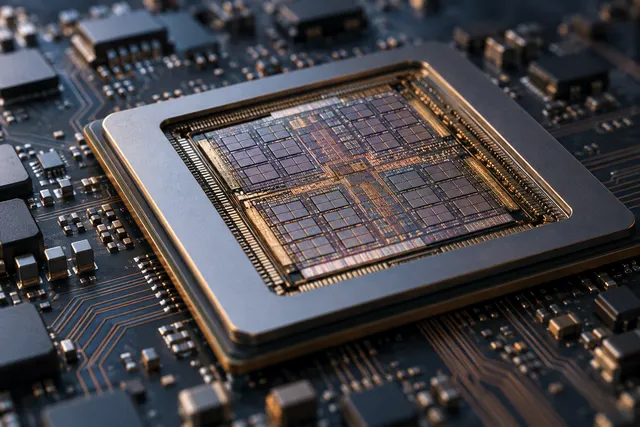
The physical substrate deserves its own evaluation. As we explain in our analysis of neuromorphic computers, an architecture can change the cost of running a model without establishing a new class of intelligence. Faced with a synthetic intelligence proposal, I would ask for the same precision: which mechanism changed, which test it passed, and under which conditions it stops working.