YANN LeCun
Passion for artificial intelligence
Yann LeCun, a name synonymous with the deep learning revolution, has had an academic and professional career marked by innate curiosity and a clear vision of the potential of artificial intelligence. From an early age, LeCun showed a keen interest in technology, building his own circuits and exploring the world of programming. He studied at Sorbonne Université and ESIEE Paris, where he gained a solid foundation in mathematics, computer science, and electronics.
He earned his doctorate at Pierre and Marie Curie University, where he began his first research on neural networks and pattern recognition. His early work focused on developing algorithms for optical character recognition (OCR), a technology that has found numerous applications in everyday life.
Academic Influences:
LeCun always acknowledges that he received important academic influences that inspired his research while also shaping its specific goals. He often cites Kunihiko Fukushima as a major influence. Fukushima’s work on neocognitron neural networks, designed to recognize visual patterns, was fundamental to the development of CNNs (which we will discuss later) . LeCun took many of Fukushima’s ideas and adapted them to create modern CNNs.
The second major influence is David Marr. Marr’s approach to computer vision, which sought to understand how the brain processes visual information, was also an important influence on LeCun. Marr proposed a hierarchy of levels of visual processing, from the lowest levels (edge detection) to the highest levels (object recognition), and this idea is reflected in the architecture of CNNs.
How convolutional neural networks came about
The Discovery of Convolutional Neural Networks:
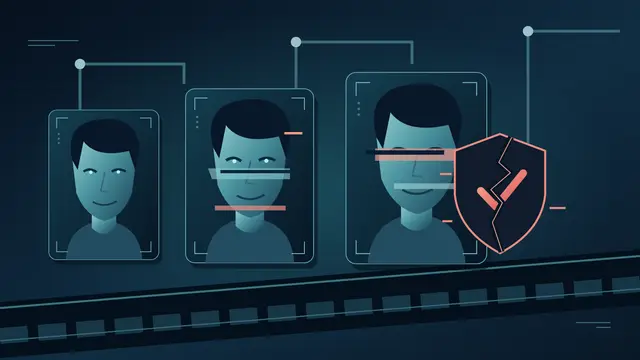
LeCun drew inspiration from the structure of the human brain to develop convolutional neural networks (CNNs). These networks are designed to process visual data efficiently, imitating the way the human brain processes visual information. His early work with CNNs focused on recognizing handwritten documents and classifying images. These advances laid the groundwork for modern computer vision applications, such as facial recognition and object detection.
Challenges in the Development of CNNs:
In the early days of deep learning, computational power was limited. Training deep neural networks required a great deal of time and computational resources. LeCun and other researchers had to develop efficient algorithms and use specialized hardware to train their models.
Another major challenge was the lack of large labeled datasets. To train a deep neural network, large amounts of training data are needed. LeCun and his colleagues had to create their own datasets, which took a great deal of time and effort.
Overfitting is a common problem in machine learning, in which the model fits the training data too closely and does not generalize well to new data. LeCun and other researchers developed techniques to avoid overfitting, such as regularization and cross-validation.
Early Applications of LeCun’s Research:
The first applications of the CNNs developed by LeCun focused on pattern recognition in images. Some of the most notable applications include:
- Optical character recognition (OCR): LeCun and his team developed OCR systems capable of recognizing handwritten and machine-printed text.
- Image classification: CNNs were used to classify images into different categories, such as faces, objects, and scenes.
- Image compression: LeCun also explored the use of CNNs for image compression.
Although convolutional neural networks are one of LeCun’s best-known contributions, his work covers a much broader spectrum of topics within artificial intelligence. Some of his other interests and contributions include:
- Self-supervised learning: LeCun has been an advocate of self-supervised learning, a technique that allows machines to learn useful representations of data without the need for human labels. This technique is fundamental to the development of more general and capable artificial intelligence systems.
- Prediction: LeCun has explored the idea of using generative models to predict the future. This line of research could have applications in areas such as robotics and planning.
LeNet-5 and the work at Facebook AI Research
Key Contributions to Deep Learning and Role at Facebook AI Research:
One of LeCun’s most important contributions is the creation of LeNet-5, one of the first successful convolutional neural networks. LeNet-5 was used to recognize handwritten digits and laid the groundwork for future research in the field of deep learning.
LeCun has contributed to the development of more efficient and effective learning algorithms, such as the error backpropagation algorithm and gradient-based optimizers.
At Facebook AI Research, LeCun has led numerous projects, including:
The development of language models: LeCun and his team have worked on developing large-scale language models, such as the Transformer language model.
Computer vision research: he continues to work on developing new techniques for computer vision, such as image segmentation and object detection.
Artificial general intelligence: LeCun has expressed his interest in developing artificial general intelligence, that is, an AI capable of performing any intellectual task that a human being can perform.
The role of Facebook AI Research:
Under LeCun’s leadership, Facebook AI Research (FAIR) has become one of the most important artificial intelligence research laboratories in the world. FAIR has made important contributions in areas such as:
Computer vision: in addition to CNNs, FAIR has developed new techniques for image segmentation, object detection, and image generation.
Natural language processing: FAIR has created large-scale language models that can generate text, translate languages, and answer questions.
Reinforcement learning: FAIR has also explored reinforcement learning, a technique that allows agents to learn to make decisions in an environment in order to maximize a reward.
Challenges and the future of AI:
LeCun has identified several major challenges for the future of artificial intelligence, including:
General intelligence: unlike humans, current AI systems are highly specialized. LeCun believes it is necessary to develop more general AI systems capable of learning and adapting to a wide variety of tasks.
Consciousness and understanding: he has expressed doubts about the possibility of creating machines that are truly conscious and capable of understanding the world in the same way humans do.
Ethics and safety: he is aware of the potential risks of artificial intelligence and has advocated for the responsible development of this technology.
In short, Yann LeCun is a key figure in the field of artificial intelligence. His contributions to the development of convolutional neural networks and his leadership at Facebook AI Research have revolutionized the way we interact with machines. Despite the progress made, LeCun recognizes that much remains to be done to achieve an artificial intelligence that is truly general and beneficial to humanity.
LeCun's view of AI's future and its ethics
Yann LeCun’s Vision of the Future of AI:
Yann LeCun has an ambitious and optimistic vision of the future of artificial intelligence. He believes AI has the potential to solve some of humanity’s biggest problems, such as disease, climate change, and poverty. However, he is also aware of the challenges and risks that come with this technology.
Some key points of his vision:
Artificial general intelligence (AGI): he believes it is possible to create machines with intelligence comparable to that of humans. However, he warns that this goal is still far from being achieved and that it will require significant advances in areas such as self-supervised learning and knowledge representation.
Human-machine synergy: he sees a future in which humans and machines will work together to solve complex problems. AI can augment human capabilities, allowing us to be more productive and creative.
Ethics and safety: he stresses the importance of developing AI in an ethical and safe manner. Standards and regulations must be established to ensure that AI is used for the benefit of humanity.
The Ethical Challenges Facing AI:
Like other AI experts, LeCun is aware of the ethical challenges this technology poses. Some of the main challenges include:
Algorithmic bias: AI systems can perpetuate and amplify biases present in training data. This can lead to discriminatory and unfair outcomes.
Privacy: the collection and use of large amounts of personal data raise important privacy issues.
Machine autonomy: as AI systems become more autonomous, the question arises of who is responsible for their actions.
Unemployment: the automation of tasks can lead to job losses and greater inequality.
LeCun proposes adopting measures to mitigate these risks, such as transparency in algorithm development, auditing of AI systems, and educating society about the benefits and risks of this technology.
Commercial uses of his technologies
The Commercial Applications of the Technologies Developed by LeCun:
The technologies developed by LeCun and his team at Facebook AI Research and elsewhere have had a significant impact on the business world. Some of the most important commercial applications include:
Image recognition: the CNNs developed by LeCun are used in a wide variety of applications, from classifying products in online stores to detecting objects in medical images.
Natural language processing: the language models developed by FAIR are used in chatbots, virtual assistants, and machine translation systems.
Product recommendation: the machine learning techniques developed by LeCun are used to personalize product recommendations on e-commerce platforms.
Digital advertising: AI is used to optimize advertising campaigns and show users more relevant ads.
In short, the technologies developed by Yann LeCun and his team have great potential to transform the way we live and work. However, it is important to address the ethical and social challenges this technology poses to ensure that it is used responsibly and for the benefit of humanity.