
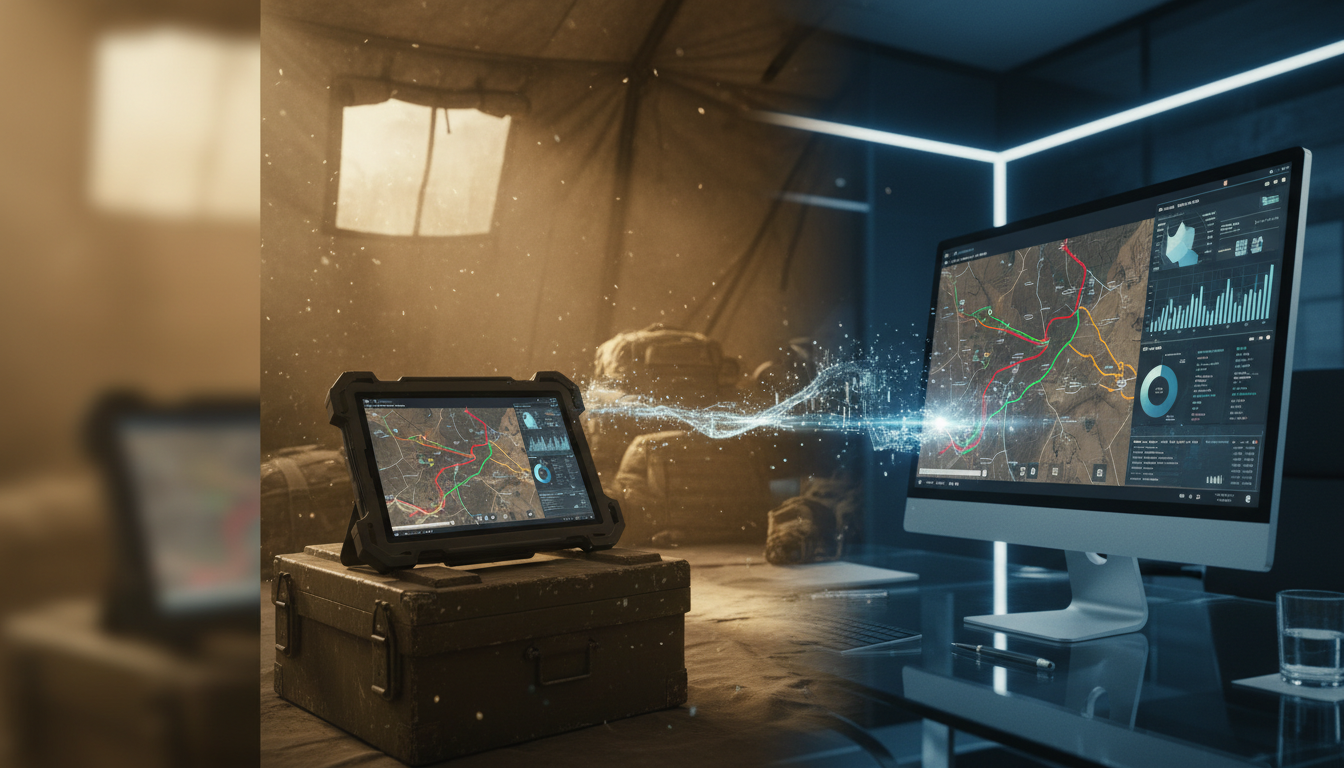

Aboard a C-130 flying over Helmand province, an infantry captain reviews reports printed in haste. Each page carries a QR code: when scanned, his tablet opens a map where dusty roads flash red, yellow, or green according to the probability of improvised explosive devices.
The person coloring those routes does not wear a uniform. He works thousands of miles away, in an ordinary office in Denver, and connects to the same database that feeds the troops. Behind the screen is a platform called Gotham, and behind Gotham lies a question: how much power should a state delegate to algorithmic scoring in war?
The baptism of fire: Afghanistan
Palantir’s first contracts with the U.S. Department of Defense seemed modest: pilot licenses to help forensic analysts find patterns in IED detonations. By 2010, however, Gotham was being deployed close to the field, ingesting patrol records, incident reports, and intercepted communications to anticipate where danger might appear.
The predictions were not infallible oracles, but they forced routes and schedules to be reconsidered. The platform became part of operational planning in Afghanistan and later Iraq: intangible, but present in the way decisions were made.
From Mosul to Los Angeles
In 2016, the battle for Mosul tested the flexibility of the software. Drone videos, street names, infrastructure maps, and field reports could be layered into one operational picture. Gotham functioned like a hybrid brain, absorbing urban chaos and returning routes with lower collateral risk.
That same logic also migrated into domestic policing. In Los Angeles, predictive-policing programs used data systems to identify hot spots and risk profiles. Civil-liberties groups criticized the projects, arguing that tools born for war can distort community policing when used without transparency and accountability.
Interagency intelligence
In national-security rooms, the same graph may display logistics flows, financial movements, intercepted conversations authorized by courts, cyberattack indicators, and public-health data. A senior official can change layers with a finger, moving from narcotrafficking to ransomware or pandemics.
The problem is that many decision-makers do not understand the code that prioritizes one lead over another. They trust the briefings and the audit trail, but democratic accountability requires more than trust in a screen.
Health, borders, and war
During the COVID-19 crisis, data platforms were used to coordinate hospital capacity, protective equipment, ambulance telemetry, and supply chains. Supporters argued that this saved lives; critics replied that emergency usefulness does not erase concerns about storing sensitive health data in private systems.
In immigration enforcement, Palantir-linked tools have been criticized for connecting detention databases, driver-license records, and social-media information. In Ukraine, the company’s systems reportedly helped fuse satellite images, drone videos, and open-source intelligence into faster operational cycles. Each case shows the same pattern: scattered data becomes an action map.
Transparency, dependence, and ethics
European regulators and civil-society organizations have pushed for stronger oversight of systems used by law enforcement and defense. Palantir argues that full openness could expose tactics to adversaries. Critics respond that black boxes are incompatible with democratic control.
There is also the issue of dependence. If a state builds critical capabilities on a private platform, what happens if prices rise, licenses change, or access is disrupted during a crisis? Strategic lock-in is not only economic; it can become tactical.
Conclusion
Palantir turns dispersed data into maps of action. The benefits are visible: fewer operational blind spots, faster logistics, better coordination. The risks are equally visible: opacity, dependency, civil-rights concerns, and the temptation to let a graph speak louder than human judgment.
The question is no longer whether states will use such platforms. The real question is under what conditions they can keep using them without compromising the delicate pact between security and freedom.



0 Comments