
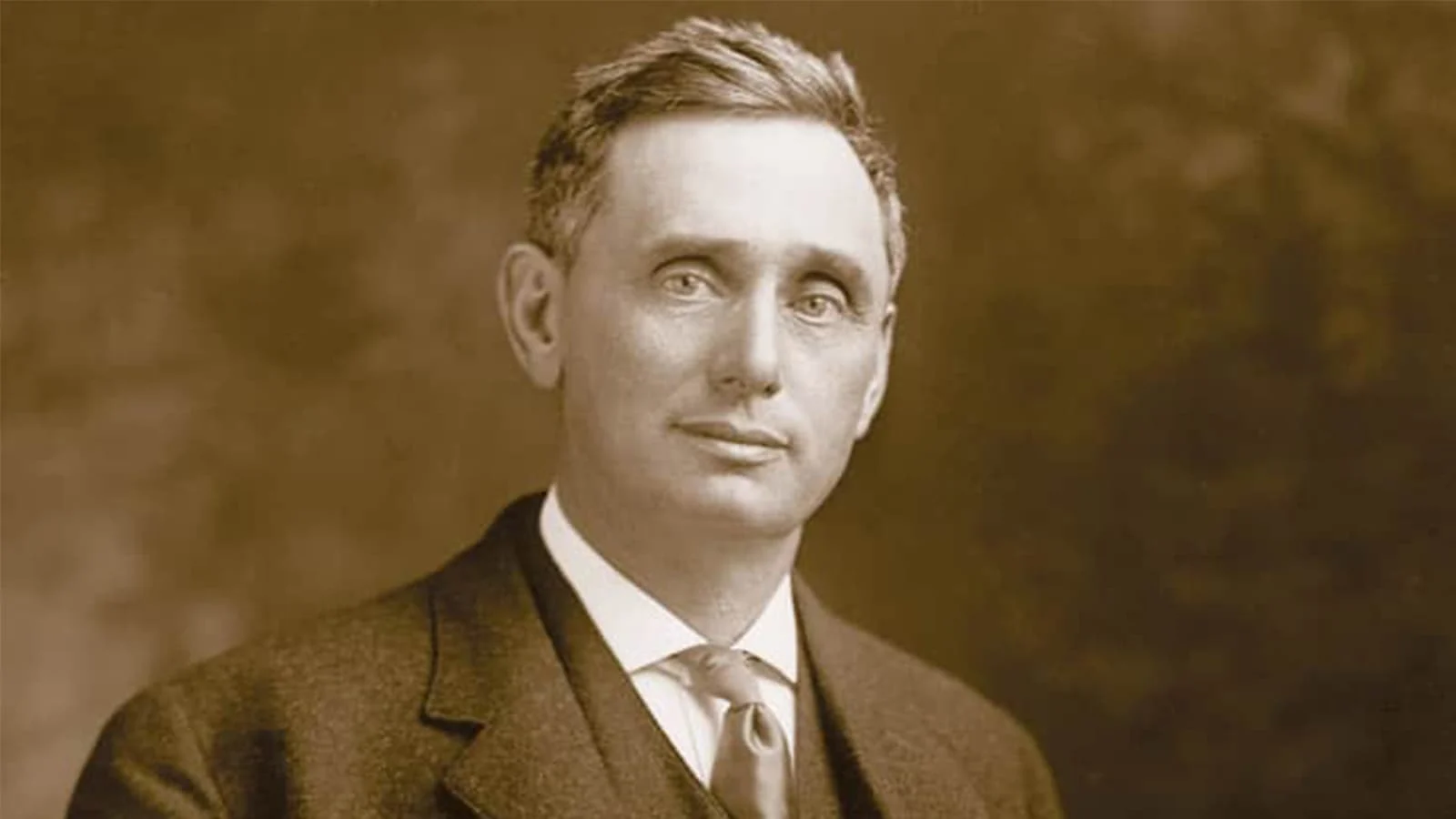

Louis Dembitz Brandeis (1856–1941)
Louis Dembitz Brandeis (1856–1941) was a monumental figure in the history of the United States, not only for his role as Associate Justice of the Supreme Court (1916–1939), but also for his progressive vision and commitment to social justice. Brandeis was the first Jewish person to hold a position on the Supreme Court, which already marked a significant milestone in the nation’s history. However, his legacy extends far beyond this symbolic achievement.
Louis Brandeis was a tireless advocate for individual rights, privacy, and economic regulation. His legal approach was characterized by a deep respect for facts and data, which earned him the title “The People’s Lawyer.”
Before joining the Supreme Court, Brandeis had already left an indelible mark on American law through his work in landmark cases such as Muller v. Oregon (1908), where he used what became known as the “Brandeis Brief,” a document based on social and scientific data to defend laws protecting workers.
Brandeis: The Man Behind the Judge
Louis Brandeis was not only a brilliant jurist but also a man of unwavering integrity and ethics. Born into a family of Jewish immigrants from Bohemia (now the Czech Republic), Brandeis grew up in Louisville, Kentucky, in an environment that valued education and critical thinking. From a young age, he demonstrated a sharp mind and a deep sense of justice—qualities that would accompany him throughout his life.
Brandeis studied at Harvard University, where he graduated with the highest grades in the law school’s history up to that time. His academic success was only the beginning of a career that would make him one of the most influential lawyers of his era.
“Brandeisianism”: A Unique Approach to Law
The term “Brandeisian” refers to a legal approach that combines pragmatism, respect for facts, and a profound commitment to social justice. Brandeis believed in the importance of adapting the law to the social and economic realities of his time, which led him to advocate for the regulation of monopolies, the protection of workers, and the defense of individual privacy. His famous phrase, “Sunlight is the best disinfectant,” reflects his belief in transparency as a tool to fight corruption and abuse of power.
Brandeis was also a fierce critic of the concentration of economic power in the hands of a few corporations. His work Other People’s Money and How the Bankers Use It (1914) served as a wake-up call about the dangers of unregulated capitalism and laid the groundwork for future financial reforms.
Brandeis’s Philosophy and Principles
Brandeis was a firm believer in the idea that law should serve as an instrument to improve people’s lives. His philosophy was based on several key principles:
The Power of Facts: Brandeis believed that legal decisions should be based on concrete data and empirical evidence. This approach was made evident in his famous “Brandeis Brief,” which revolutionized the way cases were presented before the courts.
The Defense of Privacy: At a time when technology was beginning to transform society, Brandeis was one of the first to recognize the importance of protecting individual privacy. Together with his partner Samuel Warren, he wrote the influential article The Right to Privacy (1890), which laid the foundation for the modern concept of privacy.
The Fight Against Monopolies: Brandeis was a staunch critic of the concentration of economic power. He believed that monopolies were harmful not only to the economy but also to democracy itself. His work Other People’s Money and How the Bankers Use It (1914) was a call to action to regulate the financial sector and protect ordinary citizens.
The Balance Between Freedom and Justice: Brandeis understood that true freedom could only exist in a just and equitable society. Therefore, he advocated for laws that protected workers, ensured fair wages, and limited the power of large corporations.
Brandeis and His Impact on the Supreme Court:
As an Associate Justice of the Supreme Court, Brandeis left an indelible mark on American jurisprudence. Some of his most notable contributions include:
Defense of Free Speech: In cases such as Whitney v. California (1927), Brandeis argued that freedom of speech was essential to the functioning of a healthy democracy. His opinion in this case is considered one of the most eloquent defenses of the First Amendment.
Protection of Individual Rights: Brandeis was a pioneer in the defense of civil rights and individual liberties. His dissent in Olmstead v. United States (1928), where he argued against wiretapping without a court order, laid the groundwork for privacy protection in the digital age.
Economic Regulation: Brandeis was a strong advocate for government regulation to prevent abuses of economic power. His opinions in cases related to interstate commerce and workers’ rights helped shape labor and economic law in the United States.
Brandeis’s Legacy in the 21st Century:
Brandeis’s thought remains relevant in today’s world, especially at a time when we face challenges such as the concentration of power in large tech companies, the erosion of privacy, and growing economic inequality. Some areas where his influence is particularly notable include:
Privacy and Technology: In an era of mass surveillance and data collection, Brandeis’s ideas on privacy are more relevant than ever. His work has influenced laws such as the General Data Protection Regulation (GDPR) in Europe and debates on the regulation of companies like Facebook and Google.
Social and Economic Justice: The Brandeisian movement has inspired activists and lawmakers seeking to combat economic inequality and ensure fair wages. His criticism of monopolies resonates in current calls to dismantle the power of large corporations.
Education and Activism: Brandeis University, founded in his honor, is a center of progressive thought and a breeding ground for leaders committed to social justice. Moreover, his data- and fact-based approach has influenced non-governmental organizations and think tanks seeking practical solutions to social problems.
Posthumous Influence and the Brandeisian Movement:
After his death in 1941, Brandeis’s legacy continued to grow, inspiring generations of jurists, scholars, and activists. The Brandeisian movement has become a current of thought advocating a balanced and progressive approach to law, emphasizing the importance of individual rights, social justice, and corporate responsibility.
In the legal field, his influence can be seen in modern cases addressing issues such as privacy, freedom of speech, and workers’ rights. For example, his dissent in Olmstead v. United States (1928), where he defended the right to privacy, laid the foundation for later decisions such as Griswold v. Connecticut (1965) and Roe v. Wade (1973).
Furthermore, his evidence-based approach has influenced how lawyers and judges handle cases, particularly in areas like labor law and economic regulation. The “Brandeis Brief” remains a model for presenting legal arguments supported by empirical evidence.
Brandeis and His Impact on Education and Society:
Brandeis University, founded in 1948 and named in his honor, stands as a testament to his legacy. This institution has become a center of academic excellence and a beacon of the values Brandeis championed: social justice, diversity, and commitment to the common good.
In the political sphere, Brandeis’s ideas have influenced progressive and reformist movements throughout the 20th and 21st centuries. His advocacy for participatory democracy and his critique of corporate power resonate in contemporary debates over economic inequality, the regulation of big tech, and the protection of civil rights.
Conclusion:
Louis D. Brandeis was not merely a judge or a lawyer; he was a visionary whose work laid the foundation for a more humane and just approach to law. His posthumous influence, through the Brandeisian movement, remains relevant today, inspiring those who strive for a more equitable and transparent world. His legacy is a reminder that the law is not merely a set of rules, but a powerful tool to transform society.
Louis D. Brandeis was a man ahead of his time, whose ideas and principles continue to inspire those who fight for a fairer and more equitable world. His legacy is not only found in the pages of law books, but also in social movements, public policies, and institutions that seek to honor his vision of a society grounded in justice, transparency, and respect for individual rights.



0 Comments