
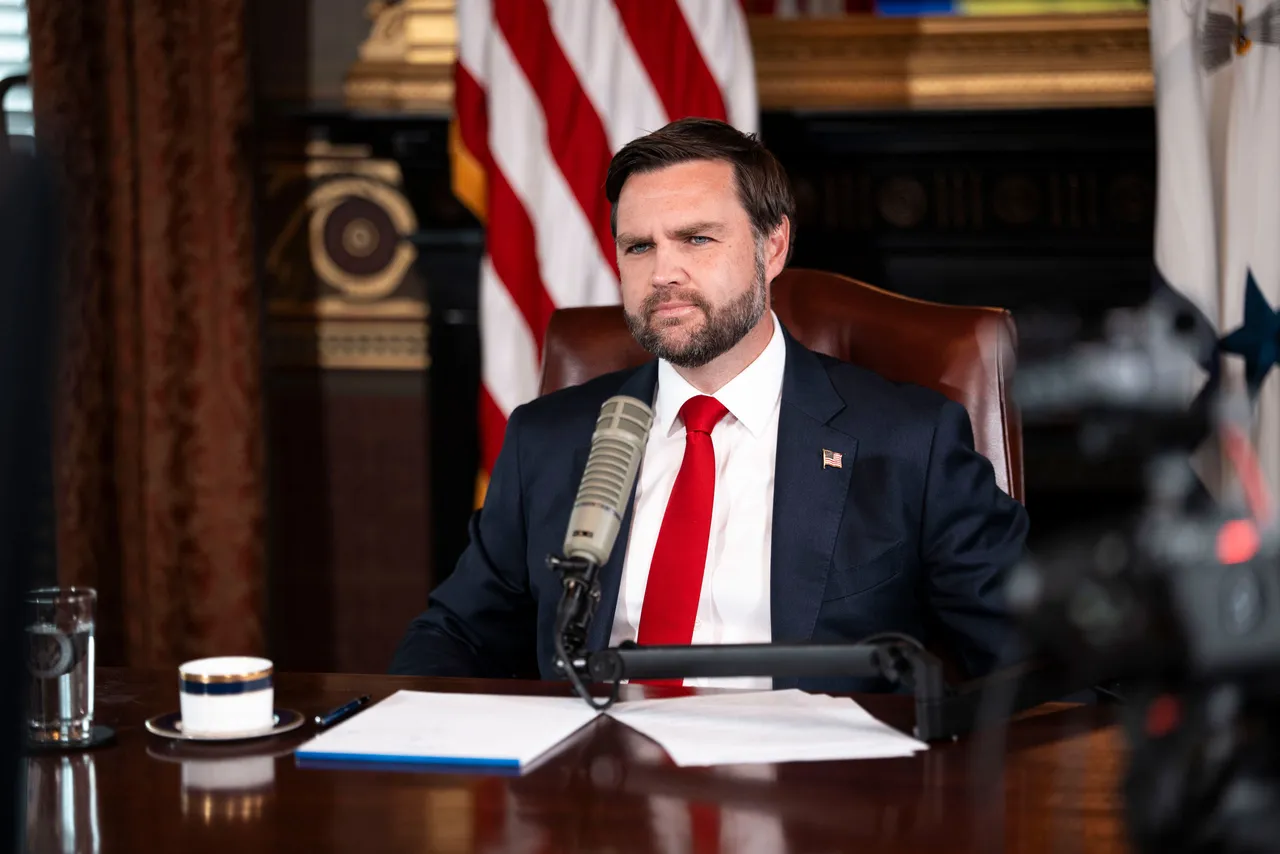

The story of James David Vance, known as J.D. Vance, seems lifted from a Hollywood script: a boy raised in the rural poverty of Ohio, brought up by a grandmother who saved him from the chaos of family addiction, who climbed to the elites of Yale and Silicon Valley, and who today emerges as one of the most polarizing and significant figures in American politics.
His nomination as the Republican Party’s vice-presidential candidate in the 2024 elections — alongside Donald Trump — is not only a turning point in his trajectory but also a symbol of the profound transformations shaking the United States: the anger of the working class, the rise of economic nationalism, and the redefinition of conservatism in the post-globalization era.
His Childhood: The Country of Shadows
Vance was born in 1984 in Middletown, Ohio, an industrial town whose economy vanished with the closing of its steel mills. His family, of Scots-Irish roots settled in the Appalachians, embodied the contradictions of the declining American dream.
His mother, a nurse, struggled with opioid addiction; his biological father abandoned him; his grandmother, “Mamaw,” a tough yet loving woman, became his anchor.
In his memoir Hillbilly Elegy (published in 2016), Vance painted a raw portrait of his community: broken homes, deindustrialization, and a fierce but self-destructive pride.
The book, an unexpected bestseller, was read as a lens through which to understand the support of the white working class for Donald Trump.
The Escape: From the Rust Belt to the Ivory Towers
Military service in Iraq (2003–2007) and a scholarship at Ohio State University were his passport to a different life.
Later, Yale Law School introduced him to a world of privilege and connections. There he met his wife, Usha Chilukuri, the daughter of Indian immigrants, with whom he has three children.
But Vance never forgot his roots. While his Yale classmates aspired to Wall Street law firms, he immersed himself in debates about the decay of rural communities.
Silicon Valley and Peter Thiel: The Romance with Technocracy
After graduating, Vance joined Mithril Capital, an investment fund co-founded by Peter Thiel, the controversial PayPal and Palantir magnate.
Thiel, a libertarian skeptical of democracy, saw in Vance an intellectual ally: someone who understood the resentment of forgotten America yet believed in the disruptive power of technology.
Together they invested in startups, but Vance soon became disillusioned with Silicon Valley’s culture.
In his own words: “I saw how technology enriched a few while leaving my people behind.”
“Hillbilly Elegy”: The Book That Made Him a Prophet
Published in 2016, amid Trump’s rise, Vance’s book was received as a manual to decipher the “Trump enigma.”
Progressive media outlets celebrated him as an authentic voice of the white working class; leftist critics accused him of blaming the poor for their own misery while ignoring economic structures.
Vance, however, refused to align with any party: he criticized both Trump and Hillary Clinton during the 2016 campaign.
Yet his narrative — a mix of cultural conservatism and skepticism toward the elites — resonated in a divided nation.
Political Transformation: From “Never Trumper” to MAGA Standard-Bearer
Vance’s radical shift occurred between 2020 and 2022.
After years of criticizing Trump — whom he once called “culturally unacceptable” and “like an opioid for the people” — Vance sought the former president’s endorsement for his 2022 Senate campaign in Ohio.
To win over the Trumpist base, he adopted anti-immigration rhetoric, questioned the 2020 election results, and embraced economic nationalism.
The strategy worked: he defeated Democrat Tim Ryan, becoming a senator backed by a coalition of rural and suburban voters.
The Political Project: Populist Nationalism in the Digital Age
As a senator, Vance has advanced an agenda blending Trump’s protectionism with a renewed social conservatism:
- Trade and Manufacturing: Advocates tariffs on China and subsidies to revive factories in Ohio.
- Technology and Free Speech: Calls for regulating Big Tech, accusing platforms of censoring conservative voices.
- Immigration: Proposes mass deportations and a merit-based system inspired by Canada and Australia.
- Foreign Policy: Skeptical of aid to Ukraine, prioritizing “national interest” over global alliances.
His alliance with Trump reflects an ideological synthesis: “America First” populism combined with intellectual right-wing circles seeking to replace neoliberalism with a more state-driven capitalism.
Controversies: Between Authenticity and Opportunism
Critics see Vance as a political chameleon.
Former allies like conservative commentator Charlie Kirk accuse him of betraying his principles for power.
His past statements about Trump — whom he compared to Hitler in 2016 — are used by opponents to question his sincerity.
Progressive groups call him a hypocrite: a millionaire funded by Thiel who claims to speak for the working class.
However, his defenders argue that his evolution reflects a pragmatic understanding of modern politics.
“J.D. didn’t change — the country did,” said a close adviser in an interview. “He’s still the same kid from Middletown who wants to fix a broken system.”
His Role as Vice-Presidential Candidate: Bridge or Soldier?
Vance’s nomination as Trump’s running mate in 2024 aims to achieve several goals:
- Connect with the Rust Belt: His personal story gives him credibility in key states like Pennsylvania, Michigan, and Wisconsin.
- Attract Youth and Minorities: At 39 and with a multicultural family, Vance offers a renewed image of the GOP, distant from its aging traditional base.
- Unify the Right: As a bridge figure between MAGA populists and nationalist intellectuals (like Tucker Carlson or Josh Hawley), Vance helps consolidate a diverse coalition.
However, risks abound.
His support for extreme anti-abortion policies (he favors bans with no exceptions for rape or incest) could alienate suburban voters.
Moreover, his lack of foreign policy experience — in a world shaken by wars in Ukraine and Taiwan — remains a vulnerability.
The Future: A President-in-Waiting?
In a Republican Party still navigating between Trump’s legacy and its post-Trump future, Vance stands out as a potential long-term leader.
His ability to articulate working-class discontent, combined with intellectual pedigree, distinguishes him from more traditional figures.
If the Trump-Vance ticket triumphs in 2024, he would become a vice president with unusual influence — shaping policy from the Senate and positioning himself as the heir to the MAGA movement.
Final Reflection: The Face of a New America?
J.D. Vance embodies the paradoxes of a nation in an identity crisis: an outsider who gained power, a critic of elites who mingles with billionaires, and a nostalgic for the past who promises a radical future.
His story is not only that of a man but of a country struggling to reconcile its founding myths with increasingly fractured realities.
At a time when American politics is defined by anger and hope, Vance is both a symptom and an architect of change.
His success or failure will determine not only his destiny but that of an America still wondering what it wants to become when it grows up.


0 Comments