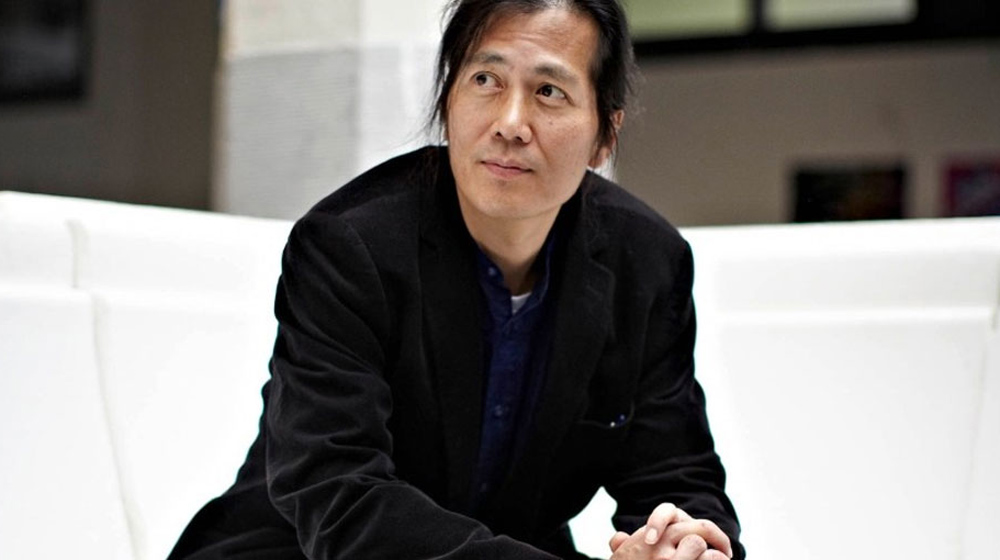

Han is perhaps the most philosophically refined and elliptical of our group of “snipers,” as well as the most skeptical. In his case, skepticism has been adopted as both a philosophy of life and a way of seeing the world. His thought—original despite its influences—has been deeply shaped by Martin Heidegger, Zygmunt Bauman, and Michel Foucault
Byung-Chul Han (born in 1959 in Seoul) is a South Korean philosopher and essayist based in Germany, whose work critically examines the dynamics of neoliberal capitalism, digitalization, and the hyperconnected society. With an incisive and aphoristic style, Han has become an indispensable voice for understanding the discomforts of late modernity—from emotional exhaustion to the loss of intimacy.
Key Concepts in His Thought
- The “Strong” First Principle: The Society of Fatigue (Leistungsgesellschaft)
Han describes a society obsessed with performance, where the individual is no longer dominated by external forces (Foucault’s “disciplinary power”) but self-exploits in the name of productivity.
- Example: The “burnout syndrome” and hustle culture glorified on social media.
- Key phrase: “The modal verb of neoliberalism is not must, but can.”
- Psychopolitics
Power is no longer exercised through repression but through control of emotions and desires. Digital platforms and algorithms collect data to influence behavior, creating a dictatorship of likes that rewards conformity.
- Example: Anxiety over validation on Instagram or TikTok, where self-exposure becomes social currency.
- Total Transparency
Han criticizes the modern obsession with eliminating all secrecy, arguing that absolute transparency destroys trust, mystery, and humanity itself.
- Example: Social-media stories that document every moment of life, draining it of depth.
- The Disappearance of the Other
In a hyperconnected world, the “hell of the same” replaces conflict with difference. Algorithmic bubbles and digital narcissism eliminate genuine dialogue.
- Example: Online communities that reinforce prejudices instead of challenging perspectives.
Main Works
- The Burnout Society (2010): Analyzes how self-exploitation replaces external oppression, generating depression and existential exhaustion.
- Psychopolitics (2014): Explores how neoliberalism uses data and positivity (“Be happy!”) to control the masses.
- The Expulsion of the Other (2017): Warns of cultural homogenization and the loss of otherness in the global era.
- Non-Things (2021): Critiques the primacy of the digital over the material, where “things” are replaced by information and screens.
Criticisms of His Thought
- Radical pessimism: Some scholars argue Han ignores emerging forms of resistance (e.g., slow life movements).
- Lack of practical solutions: His diagnoses are brilliant but offer few concrete paths for action.
- Generalizations: His aphoristic style can oversimplify complex phenomena (e.g., reducing contemporary art to “marketing”).
Relevance in the Age of AI and the Metaverse
Han’s ideas resonate in several contemporary debates:
- Generative AI (ChatGPT): Does it reinforce the “society of fatigue” by forcing us to produce endless content?
- The Metaverse: Is it the culmination of the “disappearance of the real,” replacing bodies and spaces with avatars and simulations?
- Mental health: The rise in anxiety and ADHD among youth could be seen as symptoms of “infoxication” (information overload).
A First Conclusion: An Uncomfortable Mirror for the 21st Century
Byung-Chul Han offers no comfort, but a critical mirror reflecting our contradictions: we are free to self-exploit, connected yet alone, visible yet empty. His work invites us to reject the tyranny of positivity and to recover the ability to say “no,” to embrace silence and the immeasurable. In a world that worships speed and transparency, Han reminds us that what is truly human often resides in shadows, secrets, and slow rhythms.
A Philosopher to Navigate Modernity’s Paradoxes
Beyond his well-known concepts, Han’s work unfolds a penetrating critique of contemporary culture, blending philosophy, sociology, and psychology.
- The Tyranny of Positivity
Han argues that neoliberalism replaced the disciplinary society (based on the “no” of norms) with a performance society obsessed with limitless “yes.”
- Result: A nearly uncontrollable phenomenon of perpetual optimization—the pressure to be happy, successful, healthy, and productive—creates constant guilt when ideals are not met.
- Example: Wellness apps that turn self-care into a stressful obligation rather than a genuine act.
- Key phrase: “Positivity is more effective than prohibition: no one rebels against the command to ‘Be yourself!’”
- Eros in the Digital Age
In The Agony of Eros (2012), Han critiques how hyperconnection destroys desire and love.
- Pornification of relationships: Dating apps like Tinder reduce eros to a swipe, erasing mystery and erotic tension.
- Commodification of the body: Social networks turn intimacy into spectacle, where the body is displayed as merchandise.
- Loss of the inaccessible: Instant “matches” eliminate the dialectic of desire, which requires distance and absence.
- The Crisis of Deep Time
In The Scent of Time (2009), Han analyzes how digital acceleration destroys the experience of time.
- Point-time vs. durable time: Notifications and multitasking fragment time into meaningless “particles.”
- End of contemplation: The obsession with productivity prevents us from engaging in purposeless activities (e.g., art, philosophy).
- Example: Reading a paper book vs. “consuming” summaries on TikTok—the latter reflects the impossibility of inhabiting time deeply.
- The Death of Ritual
In Saving Beauty (2015), Han laments the disappearance of collective rituals in favor of the instagrammable.
- Empty aestheticization: Art and beauty are reduced to photographable “experiences,” losing their power to move or transcend.
- Example: Crowded museums where visitors record artworks without truly seeing them.
- Key phrase: “The polished, the smooth, the cool… today beauty is a commodity without aura.”
- Capitalism and the Imperative of Authenticity
Han dismantles the neoliberal myth of “authenticity.”
- The self as brand: On social media, individuals become influencers of themselves, managing their image like a product.
- Emotional self-exploitation: Sharing “authentic” feelings online is another performance, subject to like-metrics.
- Example: “Real life” vlogs scripted and edited to appear spontaneous.
- The Pandemic as a Symptom of the Palliative Society
In The Palliative Society (2020), Han analyzes the management of COVID-19 with key insights:
- Avoidance of pain: Neoliberal society seeks to eliminate all suffering (physical or emotional) with quick fixes (e.g., pills, digital distractions), avoiding the root causes of malaise.
- Health as moral imperative: Being healthy becomes an obligation; the sick are stigmatized as “failures.”
- Example: Fitness tracking and obsession with body metrics as forms of neoliberal self-control.
- Critique of Artificial Intelligence
Han warns that AI reinforces the dynamics of the performance society.
- Algorithmic optimization: AIs like ChatGPT push us to be faster, more efficient, and “perfect,” increasing self-exploitation.
- Loss of otherness: Algorithms show us only what we already know (information bubbles), erasing encounters with difference.
- Example: Netflix or Spotify recommendation systems that homogenize cultural consumption.
What Does Han Propose? Alternatives in the Fog
Though often criticized for not offering clear solutions, his texts hint at possible paths:
- Recover the art of deep attention: reading, contemplating, creating without haste.
- Embrace negativity: accept pain, failure, and conflict as essential parts of being human.
- Revitalize rituals: restore collective practices with symbolic meaning (e.g., meals without screens, community ceremonies).
Conclusion: A Philosopher to Resist Self-Exploitation
Byung-Chul Han is not a self-help guru but a diagnostician of our invisible ailments. His work invites us to question the cult of efficiency, disconnect from validation metrics, and rediscover the beauty of the imperfect, the slow, and the opaque. In a world urging us to become performance machines, Han reminds us that true freedom may lie in the simple act of saying enough.

0 Comments