by Research Team from the Laboratory of the Future | Jun 22, 2023 | Economy and the future of work
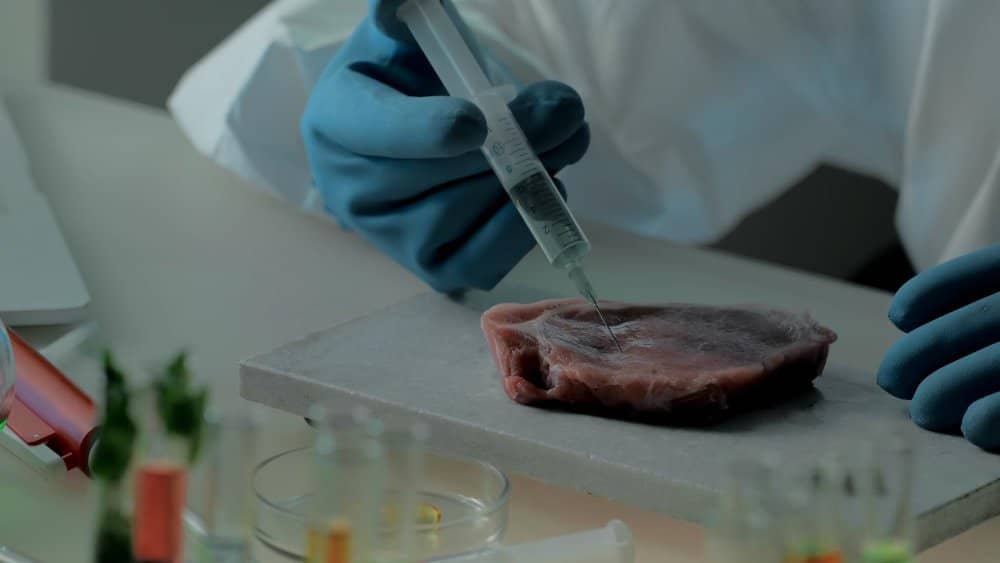
The U.S. approves the human consumption of lab-grown chicken meat.
The U.S. food regulatory agency has given the green light for the first time to the commercialization of lab-grown chicken meat in supermarkets and restaurants.
The authorization granted:
The Federal and Drugs Administration (FDA), the U.S. food and drug regulatory agency, has authorized for the first time in its history a lab-grown meat product for human consumption. This authorization applies to chicken meat produced in the facilities of the Californian company Upside Foods and the company Good Meat, which now have approval to bring their products to supermarkets and restaurants in the U.S.
Upside Foods, formerly known as Memphis Meats, will be able to market its lab-grown chicken once the USDA (U.S. Department of Agriculture) has inspected its facilities. The meat is produced by extracting living cells from the animal, which are then placed in stainless steel tanks where they replicate until they form a structure and consistency similar to a chicken fillet.
After evaluating the production and the cultivated cell material used by Upside Foods, the FDA stated that it has “no further questions” regarding the safety of its lab-grown chicken fillet. “The world is experiencing a food revolution, and the U.S. FDA is committed to supporting innovation in the food supply,” said FDA Commissioner Robert Califf and Susan Mayne, director of the FDA’s Center for Food Safety and Applied Nutrition in a statement.
The implementation of this measure marks the beginning of a new era aimed at eliminating animal slaughter and reducing the environmental impacts of grazing, growing food for animals, and animal waste.
“Instead of dedicating so much land and water to feeding animals that will be slaughtered, we can do something different,” said Josh Tetrick, co-founder and CEO of Eat Just, the operator of the multinational Good Meat.
On Wednesday, both companies received approval from the required federal inspectors to sell lab-grown meat and chicken in the U.S.
Additionally, the Food and Drug Administration gave the green light to another manufacturer, Joinn Biologics, which works with Good Meats.
The new lab-grown meat market:
This meat is said to drastically reduce water consumption, land area, and resources used in traditional industrial livestock production. It is also considered more sustainable because it generates less pollution and CO2. It is a global market that has attracted over $2 billion in investments, mainly led by Israel and the U.S.
The Israeli company, Aleph Farms, previously introduced the first rib made with a 3D printer, a significant evolution from the lab-grown ground meat seen so far. Making a steak is much more complicated than recreating ground meat; to replicate a muscle piece, it needs to be given a structure to support it, along with fat and connective tissue. We also have Future Meat, one of the largest lab-grown meat companies in the world, which claims to have a production process that reduces the cost of its chicken breasts from 15 euros to only 6.80 for 450 grams.
The U.S., particularly California, is another place where significant investments are being made in this technology. Three companies: Finless Foods, BlueNalu, and Upside Foods are competing for a share of the cultivated meat market, producing not only chicken, lamb, and beef but also crustaceans and mollusks.
However, there are voices that are less optimistic. French researchers Sghaier Chriki and Jean-François Hocquette published a study titled “The Myth of Cultivated Meat,” questioning whether the industry will be able to artificially produce compounds like hormones and growth factors that are naturally found in animals.
The mass adoption of this type of meat on our tables depends on regulatory agencies. So far, Singapore and the U.S. agencies have taken the path of authorizations, and it is expected that the European agency will do so soon.
More than 150 companies are cultivating meat from animal cells. While the innovation is surprising in the U.S., globally, more than 150 companies are focusing on cultivating meat from cells, not just chicken, but also pork, lamb, fish, and beef, which have a greater environmental impact.
The “lab-grown” chicken is cultivated in steel tanks with cells from a live animal, a fertilized egg, or a special cell bank.
In the case of Upside, the production comes out in large sheets, which are then shaped into chicken cutlets or sausages.
Meanwhile, Good Meat, which already sells lab-grown meat in Singapore, the first country to authorize it in 2020, turns accumulations of chicken cells into ribs, nuggets, and ground meat.
Where to consume the authorized meat:
Nevertheless, this new form of consumption in the United States will not be immediate, nor will it be consumed by everyone.
“Lab-grown chicken is much more expensive than traditional farm-raised chicken. Additionally, it cannot be produced on the same scale as traditional meat,” according to Ricardo San Martín, director of one of the Meat Lab departments at the University of California, Berkeley. For now, companies plan to serve the new food in selected restaurants. In the case of Upside, it has already partnered with the Bar Creen restaurant in San Francisco; while Good Meat’s dishes will be served at the Washington restaurant run by its chef and owner José Andrés. No agreements have yet been made with any supermarket chains.

by Research Team from the Laboratory of the Future | Jun 21, 2023 | News
On Wednesday, June 21, 2023, the Technological Laboratory of Uruguay (LATU) welcomed Microsoft’s Artificial Intelligence Lab to its Technology Park in the Las Orquídeas room, in the presence of President Dr. Luis Lacalle Pou.
LATU’s Technology Park brings together public and private companies and organizations, forming a powerful international ecosystem of technology, education, entrepreneurship, research, creativity, and innovation.
The Microsoft AI Co-Innovation Lab, one of four labs of its kind in the world, will be installed in the park, creating a new landscape of opportunities for business innovation by providing cutting-edge tools and technology.
LATU will serve as a bridge to connect businesses and projects with the lab, accelerating innovation and supporting organizations of various sectors and sizes. It will enable the offering of tailor-made solutions that integrate artificial intelligence and the internet of things to drive business and productive development.
by Research Team from the Laboratory of the Future | Jun 18, 2023 | Economy and the future of work
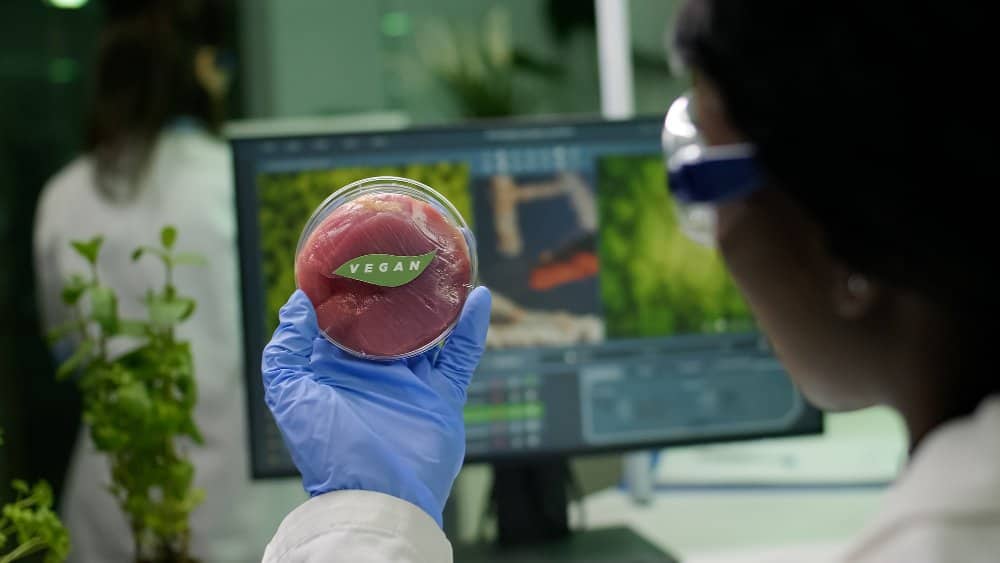
More bad news for livestock farmers, although it will take years to affect their activity: a tasting by experts concludes that we cannot distinguish between the taste of synthetic meat and real meat. By the way, in Uruguay, a country that is essentially agricultural, the responses from specialized public and private organizations are denialist. It seems difficult to halt the development of this type of work, whose greatest challenge so far is not scientific, but economic and cost-related. It would be advisable to begin adopting the necessary technology, without abandoning – of course – the natural breeding methodology.
The chicken test:
Now it seems that humans are incapable of distinguishing the taste of cultivated meat from real meat. At least, this is the conclusion from the results of a blind tasting with three renowned Israeli ‘gourmets,’ one of them a “professional taster and judge of ‘MasterChef,’” according to what the magazine ‘Time’ reports.
The judges of this blind tasting before a notary — even the cook didn’t know which meat was which — couldn’t tell the difference between cultivated chicken and real chicken, cooked exactly the same and without any additives, not even salt. In fact, the chicken was only sautéed in sunflower oil.
The blind tasting was done with chopped chicken, offering an identical bite. The chicken used in the test — cultivated by the Israeli company SuperMeat — is completely lean meat because they don’t grow it with fat yet. The judges pointed out that both samples — labeled as A and B — didn’t have much flavor, which was to be expected as it was breast meat. Without skin and without seasonings, chicken breast isn’t flavorful, but it still tastes like chicken.
One of the judges — chef and Israeli restaurant owner Yair Yosefi — was able to detect a difference between the two meats, but admitted that he couldn’t pinpoint which one was real chicken and which was lab-grown.
Yosefi thought that perhaps the farm-grown chicken was sample B, but the ‘MasterChef’ judge — Michal Ansky — thought the opposite, as B had less flavor than A. The correct answer: B was the real chicken. An unsure Yosefi got it right by chance. Ansky was wrong, although she was fully convinced that sample A was the cultivated chicken.
Ansky was glad to be wrong. According to her, the migration to cultivated meat is inevitable because current global production is unsustainable. Now it only needs to be perfected so we can buy a beef rib at the supermarket indistinguishable from a real one. 3D printed, with the desired thickness, perfectly marbled fat, and the taste of grass and corn in the background.
A race for the perfect cultivated meat:
But there is still a long way to go for that holy grail. Or for us to see a whole chicken breast or thigh grown in full in our supermarkets. Not more than a couple of decades, some say, but it’s still a while away. First will come products like chicken nuggets or ground beef to make meatballs and hamburgers.
Israel — which seems to be leading the way in these kinds of developments — has several startups competing to create the perfect cultivated meat. Unlike North American companies like Beyond Meat or Impossible Burger — which are already selling plant-based processed meat with proteins that mimic the taste of blood, but still don’t come close to the flavor of real meat — companies like SuperMeat or Future Meats grow cloned muscle cells from the animal of choice, assembled in the factory. They don’t simulate meat. Biologically, it is real meat grown in a lab. Not a substitute. And the technology is evolving at a chilling pace.
The first 3D printed rib.
The other major barrier for synthetic meat, for now, is the price. The first synthetic hamburger debuted at a price of over 300,000 euros per unit, but it has been steadily and quickly decreasing. Like it or not, cultivated meat is here to stay. And in a few years, we won’t even notice that the Big Mac, the meat in general, or the barbecue rib hasn’t been extracted from a slaughtered animal, but from a completely efficient manufacturing chain with no harmful waste. The same will happen with eggs and fish.

by Research Team from the Laboratory of the Future | Jun 17, 2023 | Space Exploration
China continues to pressure the U.S. in a reedition of the 1960s space race. While Americans accumulate delays and issues, the Asians are advancing faster and faster. It’s a kind of reedition of the space race and the race to the Moon between the Americans and the Soviets during the Cold War. In this second Cold War, the issue is repeating itself, but this time the United States seems to have a more technically and financially solid adversary.
The 1960s space race is being reedited with China replacing Russia as the great rival power to the U.S. Americans had planned to reach the Moon by 2025, but a series of delays and failures with the new spacecraft that were supposed to take them to our natural satellite have shattered their predictions. Meanwhile, Beijing is accelerating and is committed to sending humans to the Moon before this decade ends.
The two major economies of the moment, China and the U.S., are already competing militarily and in the markets to expand their influence worldwide. But now they are also competing in an old battleground: the Moon.
China’s plan is to arrive before 2030:
China announced several updates yesterday in its young and powerful space program. Among them, their intention to send taikonauts (as they call their astronauts) to the Moon before 2030 and to expand their new Space Station, which was completed last November. China built the Tiangong after being excluded from the International Space Station due to U.S. pressure, which was uncomfortable with the ties between China’s space program and its People’s Liberation Army.
According to Lin Xiqiang, Deputy Director of the China Manned Space Agency, Beijing’s plan will start with a brief stay on the lunar surface and “a joint human-robotic exploration.” Additionally, Lin stated that a fourth module will be added to Tiangong to support scientific experiments and provide the crew with better working and living conditions.
“We have a complete human space station near Earth and a human transportation system for round trips,” complemented by a selection, training, and support process for new astronauts, according to Chinese officials. A schedule of two crewed missions per year, according to recent statements, is “enough to achieve our goals.”
These goals aim to establish a permanent lunar base at the South Pole of the Moon before NASA. In fact, Beijing has brought forward its construction to 2027, instead of 2035 as originally planned. To achieve this, they want to replace their Long March 9, their current heavy and fully disposable rocket, with a fleet of reusable rockets like those proposed by SpaceX, whose main shareholder is Elon Musk.
As stated earlier by Wu Yanhua, Deputy Director of the Chinese Space Agency, they have accelerated the program because they want to “build a solid foundation for the peaceful use of lunar resources.” However, this Chinese reaction is in response to the Artemis Accords proposed by NASA to the entire international community, including China and Russia.
The Artemis Accords establish “a safe and transparent environment that facilitates exploration, science, and commercial activities for the benefit of all humanity.” The agreement requires all signatory countries to declare their policies and plans for solar system exploration, as well as to publish all scientific data obtained from space missions—something Beijing is unwilling to consent to.
U.S. suffers delays and considers budget cuts:
The U.S. has imposed a demanding schedule that will be difficult to meet. NASA has also set the lunar South Pole as its landing site, with the date being considered for the end of 2025.
The U.S. mission to return to the Moon is called Artemis, and to achieve this, they are relying on companies like SpaceX, Boeing, and Blue Origin. The program will spend about $93 billion between the fiscal years 2012 and 2025, of which $23.8 billion has already been spent solely on the Space Launch System (SLS) rocket, which has successfully flown after numerous delays, although it has cost far more than originally budgeted.
Meanwhile, the other main spacecraft of Artemis, SpaceX’s Starship—the largest and most powerful rocket ever created—remains unfinished. Its design is reusable, unlike the SLS, and it could reach not only the Moon but also Mars, as its CEO Elon Musk desires. Last April, a test flight of Starship ended with the spacecraft turning into a massive fireball. Now, the U.S. Federal Aviation Administration (FAA) has stopped the launches and is evaluating the destruction caused by the launch. Their approval for the next test launch could take months. The consequences of the explosion were significant, damaging third-party property, and it alarmed U.S. aerospace and aviation authorities, although Musk feels that the next test will be ready soon. Many people disapprove of the trial-and-error methods characteristic of SpaceX.
Moreover, the proposed budget deficit cuts by many members of the Republican Party, who now dominate the House of Representatives, could significantly reduce NASA’s budget and jeopardize many of its programs, especially the Artemis mission to return to the Moon, according to the specialized publication Space Policy Online.
NASA Administrator Bill Nelson stated last March that the cuts would be “devastating and potentially irreversible” for NASA’s programs, delaying or canceling many missions. Nelson outlined several potential scenarios due to the cuts, one of which “would significantly restructure or end” several elements of the mission. We will have to wait for the coming months to see the outcome of this issue.