
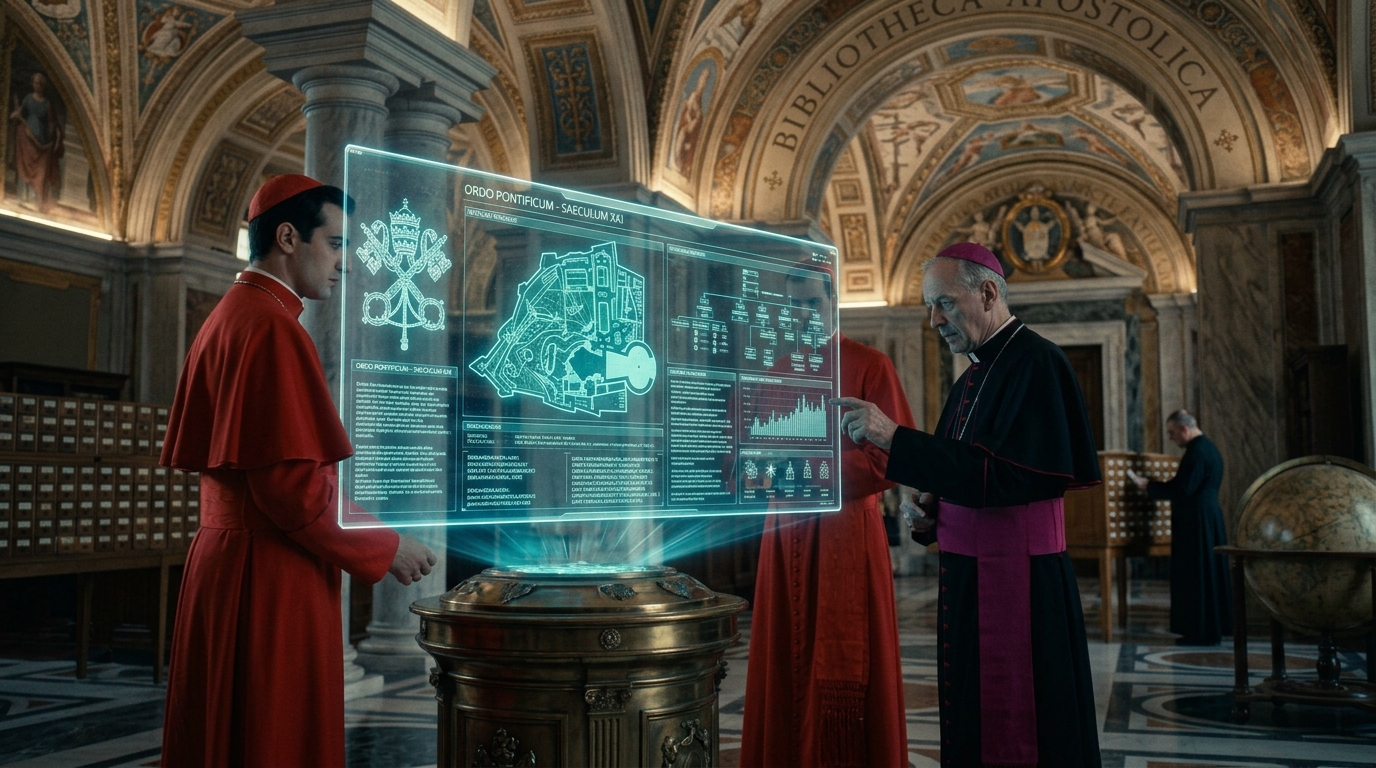

The Holy See has carried out intense diplomatic activity around artificial intelligence in 2026, using its observer status at the United Nations and its bilateral relations with more than 180 states. This activity is not accidental: Magnifica Humanitas calls for a transition from a culture of power to a true culture of negotiation, where dialogue and diplomacy become the usual path for addressing conflict.
On June 19, 2026, the Vatican delegation to the United Nations in New York participated in an interactive dialogue with the co-chairs of the Independent International Scientific Panel on AI. The delegation stated that assessing the opportunities and risks of artificial intelligence does not mean obstructing progress, but exercising responsibility.
The delegation stressed that technology is never neutral. It inevitably reflects the priorities and assumptions of those who design, finance, regulate and use it. Every system incorporates choices through what it measures, what it ignores and what it optimizes. For that reason, ethical considerations must guide technical aspects from the beginning instead of being treated as an accessory or later addition.
On July 8, 2026, during the AI for Good Global Summit in Geneva, the Permanent Mission of the Holy See promoted a high-level conversation dedicated to Magnifica Humanitas. The debate connected the ethics of AI development, business responsibility and the reasons for the Holy See’s active engagement.
The Vatican’s presence in the G7 has also been significant. Pope Francis had already addressed world leaders on AI ethics in 2024. Leo XIV continued and deepened that line, calling not only for regulation but for the disarmament of AI and for technology to become welcoming rather than threatening.
The encyclical also diagnoses the crisis of multilateralism. Institutions created to safeguard the shared destiny of peoples, especially the United Nations, appear weakened not only by structural limits but by the absence of a shared will to support and reform them. The force of international law is often replaced by the supposed right of the strongest.
The Pope calls for an international framework that includes algorithmic transparency, independent audits, equitable access to data, appeal mechanisms for people affected by automated decisions, and shared rules to slow the technological arms race.
Vatican diplomacy is not limited to institutional presence. It proposes a cultural change. In international relations, dialogue is the indispensable instrument of diplomacy, even with interlocutors considered uncomfortable or illegitimate. The goal is to recover even the weakest signs of goodwill and begin a process of pacification.
Cyberspace has also become a field of confrontation. Cyberattacks, data manipulation and influence campaigns assisted by AI can destabilize entire countries even before open armed conflict begins. In this environment, responsibility is often difficult to attribute, increasing the risk of disproportionate responses and escalation. A diplomacy capable of operating in this new environment is therefore essential.
Compared with other global actors, the Vatican occupies a distinct position. The European Union advances through the AI Act; China promotes its own international body; the United States struggles to articulate a coherent global governance strategy. The Vatican, without economic or military power, seeks to act as a moral mediator and a catalyst of conscience.


0 Comments