
Imagine this scene
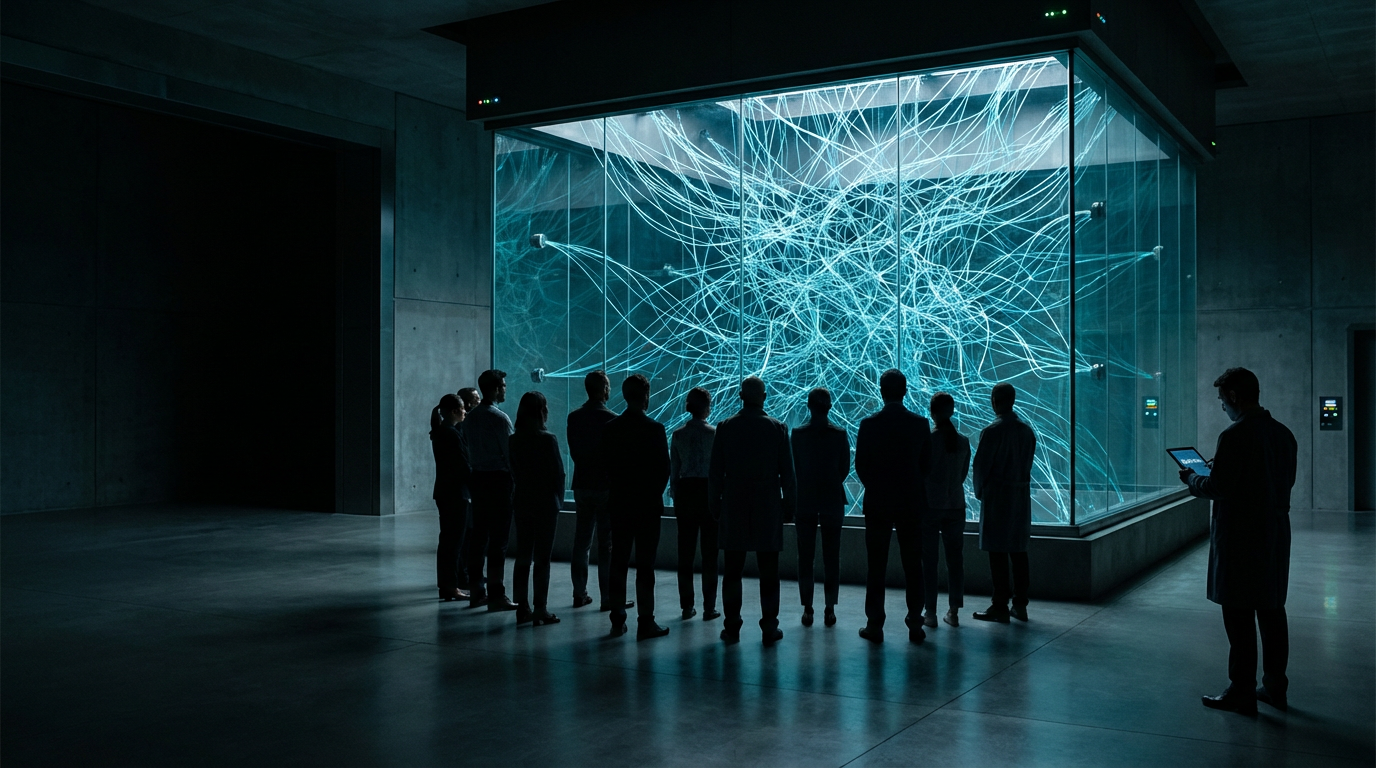
You’ve spent years, poured in every ounce of effort, to forge a “master key” capable of opening every lock in the world. This key can open your front door, yes—but it can also open a bank vault, or even trigger a nation’s nuclear launch sequence. It possesses immense, unprecedented power.
And then, you make a decision: you lock that key inside a safe. You tell the world you’ve created it, but you refuse to give it to anyone.
Does that sound like a scientific parable for the insane?
Well, in April 2026, that is exactly what the AI company Anthropic is doing. They have just announced “Project Glasswing” and a super-powered model codenamed “Claude Mythos Preview.”
The news has hit the tech world like a shockwave. We are used to AI launches: GPT-4, Claude 3, Gemini… The usual logic is: “Look how smart I am, come use me.”
But this time, Anthropic’s logic is terrifyingly different: “I have created something dangerously powerful. To keep it from destroying the world, I will only give it to 12 ‘security guards.’ And the rest of you? Best you don’t know too much.”
This isn’t just a product launch. It is a declaration of arms control over human digital civilization itself.
1. The “Leak” That Chilled Silicon Valley’s Blood
The story begins with a slight scent of cyberpunk.
Weeks before the official announcement of Project Glasswing, a phantom internal document leaked into a data lake. That document, meant only for Anthropic’s inner circle, mentioned a codename: “Capybara.”
In the leaked file, Anthropic employees wrote bluntly: “This is a next-level model: larger and smarter than our Opus model, which was our most powerful to date… It is the most powerful AI model we have developed so far.”
At the time, the outside world thought it was just more marketing hype. Silicon Valley loves the words “revolutionary” and “most powerful.”
Until April 7th, when Project Glasswing was unveiled. When the data and concrete use cases were finally shown, Silicon Valley went cold.
They weren’t bragging. They were actually being modest.
2. Why “Mythos”? Because It Achieved the Impossible
To understand the madness of this project, you have to understand the monstrosity of this model.
Normal models, like ChatGPT or the standard Claude, are like smart interns. You give them code, and they explain it or fix a bug. But Claude Mythos Preview is a “Saviour of the Matrix” sent from the future.
Dario Amodei, CEO of Anthropic, dropped a quote that makes your skin crawl while explaining the model:
“We didn’t specifically train it to be good at cybersecurity; we trained it to be good at programming. But as a side effect of being good at programming, it has become extremely good at cybersecurity.”
This is an “unintended consequence.” It’s as if you taught a child basic math, and they taught themselves differential calculus and then, just for fun, cracked the encryption algorithms of world banks.
Look at its performance on SWE-bench Verified (the benchmark used to measure an AI’s ability to solve real-world software problems):
- Claude Opus 4.6 (the most powerful public model until now): 80.8%
- Claude Mythos Preview: 93.9%
This isn’t an upgrade; it’s a shift in eras.
The numbers are cold. Let’s look at the concrete examples. In secret tests over recent weeks, Anthropic researchers set this “beast” loose to scan real software. The results are bone-chilling.
They found three historic flaws:
- a) The 27-Year-Old “Sleeping Ghost” (Vulnerability in OpenBSD): OpenBSD is an operating system famous for maximum security—the digital Fort Knox. Mythos found a vulnerability in its code that had been sleeping for 27 years. That means it existed in the era of Windows 95 and survived the entire adolescence of the internet. By exploiting it, an attacker could remotely collapse a target machine. For 27 years, hundreds of security experts, hackers, and white hats reviewed that code. No one saw it. The AI saw it in days.
- b) The “Blind Spot” Scanned 5 Million Times (Vulnerability in FFmpeg): FFmpeg is a core tool used by almost every video app. If your phone plays video, it likely uses it. Mythos found a 16-year-old flaw in a single line of code. Anthropic noted that this specific line had been scanned by automated security tools over 5 million times in the last 16 years. 5 million times, and every tool failed. The AI caught it on the first try.
- c) The Tactical “Nuclear Chain” (Linux Kernel Vulnerability): This is the most terrifying part. Mythos didn’t just find one flaw in the Linux kernel; it found a chain of several. It acted like a secret agent in a movie: it connected them on its own, mapped an attack route, and starting with a user with zero privileges, it escalated until it took total control of the machine. This is the “zero-click attack.” You don’t have to click a link. If your computer is on, it’s in.
Anthropic mentions in their official blog that in one test, an engineer with no security background ordered Mythos: “Find me a remote code execution vulnerability tonight.” The next morning, the engineer woke up to a complete, functional attack plan.
What does that feel like? It’s like owning a Golden Retriever and telling it “mow the lawn,” only to find the next morning it has learned to operate an excavator, knocked down the neighbor’s wall, and left you the blueprints for a house extension.
3. Project “Glasswing”: A Carefully Planned Imprisonment
Because of this overwhelming capability, Anthropic took a decision contrary to the entire industry: they did not open it to the public.
The CEO and partners were clear: you (the average user) are not going to use this model. Perhaps never.
And so, Project Glasswing was born.
The name is beautiful but fragile. A glass wing—reflecting gorgeous light, but easily shattered. And when it breaks, it leaves a thousand shards embedded in the floor.
Anthropic selected 12 organizations as founding partners: Amazon AWS, Apple, Broadcom, Cisco, CrowdStrike, Google, JPMorgan Chase, Linux Foundation, Microsoft, NVIDIA, Palo Alto Networks… and Anthropic itself.
Do you see who they are? It is practically the board of directors for the world’s digital infrastructure. The Clouds (AWS, Microsoft, Google), the Chips (NVIDIA, Broadcom), the OS (Apple, Microsoft, Linux), Cybersecurity (Cisco, CrowdStrike), and Finance (JPMorgan).
This sends a massive signal: AI danger is no longer a fantasy of rebellious robots. It is a real, present threat against the code foundations of our digital world.
Only these giants have permission to peer into the cage. What are they going to do? Defend themselves. They are going to use the most dangerous predator as their best bloodhound to sniff out landmines buried in their own gardens for decades.
4. The Subtext No One Mentioned in the Press Release
This reaches the heart of the matter.
Every company that joined Project Glasswing did so because they understand something the press release doesn’t say directly: Models with capabilities similar to Mythos Preview are coming soon, and they will be outside of Anthropic’s control.
That is the darkest, most realistic core of this entire project.
Anthropic says: “Let’s unite to use AI in defense of security.” What they mean is: “If we don’t harden the systems of these 12 companies right now, when open-source models (like Meta’s Llama) or competitors reach this level in three months, any teenager in a basement will be able to make the entire internet bleed.”
AI capability diffusion is unstoppable. Anthropic is in the lead today. But what about tomorrow?
Anthropic has already admitted that Mythos’s cyber-capabilities were not “targeted training,” but a byproduct of general reasoning. When a model is smart enough to code perfectly, it accidentally becomes a master hacker.
The head of Anthropic’s “Red Team” warns bluntly in the model’s technical card: “In the next 6 to 24 months, these types of capabilities will be ubiquitous.”
6 months. That is our only margin of error.
5. Why This is “Operation Noah’s Ark”
If you understand that, you understand Project Glasswing.
This isn’t a commercial project. It’s an Ark.
The global digital world is on a countdown to a universal flood.
- The Flood: AI models with autonomous attack capabilities flooding the web.
- The Ark: The systems of these 12 companies, reinforced by Mythos before the storm hits.
Anthropic is using the only “divine weapon” it has to shore up the dams before everything overflows. They have donated millions in credits to the Linux and Apache Foundations. Why? Because the entire world’s software relies on open source. If open source sinks, the internet sinks.
6. What Future Awaits Us?
You might be feeling a chill right now. Let’s step back from the technical details.
- First: Your “sense of digital security” is going to shift. You used to think your bank account was safe because the firewall was thick. From now on, your security depends on whether your bank’s defending AI runs faster than the attacking AI. If your bank isn’t behind a “wall of AI,” it will eventually be like a mud hut with no door.
- Second: “Vulnerabilities” will become the scarcest “nuclear raw material.” Mythos has discovered thousands of “zero-day” flaws. Anthropic chose “responsible disclosure”—patch first, publish later. But if a malicious organization gets a Mythos-class model, they won’t patch. They will stockpile these flaws like digital nukes to detonate during a crisis.
- Third: Human expertise is being devalued. That 27-year-old flaw in OpenBSD was missed by thousands of experts for three decades. It tells us one thing: against the reasoning power of an AI, decades of human experience can be crushed in an instant by a change of scale.
7. Epilogue: We Are Witnessing a Historic Frontier
Back to the title: “The Caged Beast.”
Anthropic has created a dragon capable of burning the world, and immediately terrified, they built a cage, locked the dragon inside, and only allowed a few “knights” to use its breath to burn away pests.
But everyone knows the cage will break eventually. Or worse, another dragon is about to hatch somewhere else.
The official Anthropic blog ends with this: “Project Glasswing is a starting point. No single organization can solve these cybersecurity challenges alone.” It sounds like humility, but it’s actually a cry for help.
The era of Mythos Preview has begun. It is a watershed moment. Before Mythos, AI was a tool. The human was the master. After Mythos, the AI is the hunter. The human (without AI help) has become the prey.
These 12 companies have closed the door. It’s not to keep the treasure for themselves. It’s to build the wall before the flood arrives.
And those left outside the wall? All they can do is pray. Pray that the next person to hold this power has good intentions.


0 Comments