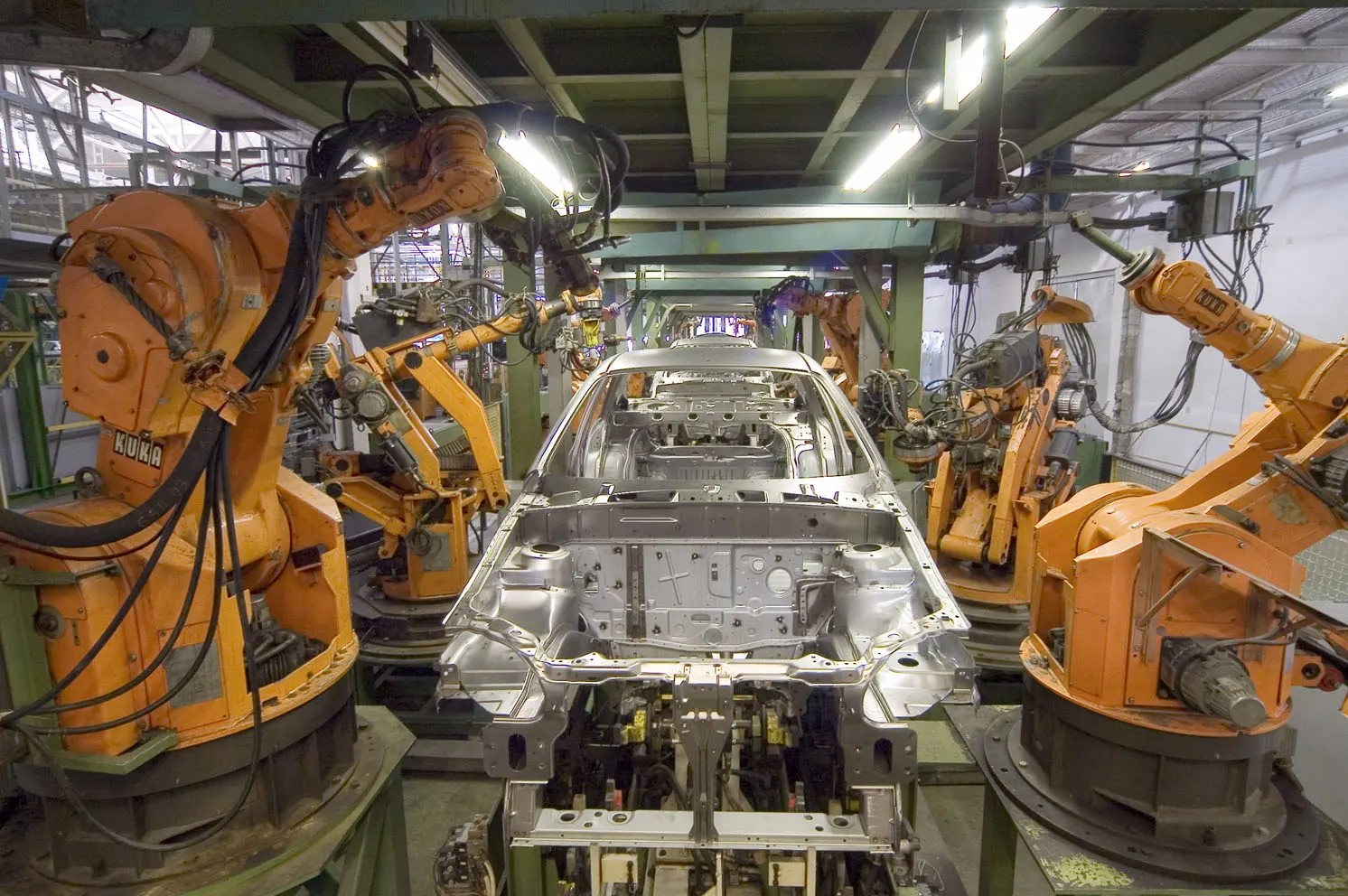
Years ago, Bill Gates proposed a tax on robots. The idea was met with skepticism, if not outright ridicule. In his 2026 manifesto, he revives it with renewed urgency: "We should tax AI tokens and robots." But is this a realistic solution, or a notion from someone who no longer understands the digital economy? If robots are cheaper than humans, the market will choose them. A tax will not stop the wave; it will only tilt it slightly.
On paper, Gates's tax proposal is impeccable in its logic. Under the current tax system, if an employer hires a person, it pays payroll taxes (social security, unemployment insurance, and so on). But if it buys a robot, it can immediately depreciate it as a business expense. The system, as Gates says, "pushes toward replacing people with machines." A tax on robots and AI tokens would level the playing field: automation would not be free; it would carry a fiscal cost reflecting its social impact.
The economic logic of the proposal.
The idea has a solid economic basis. The theory of public goods and negative externalities holds that when an activity imposes costs on society (in this case, unemployment and the loss of tax revenue), it should be taxed to internalize those costs. A robot tax would be a "Pigouvian tax," like a carbon tax intended to discourage emissions.
A targeted tax and its bureaucratic cost
Gates specifies that the tax should be "targeted" so as not to hinder purely beneficial uses, such as reducing the cost of medicine or education. That entails complex tax differentiation: taxing automation more heavily in sectors with high job losses (logistics, manufacturing, administrative services) and less in sectors with high social value (health care, education). But how can that differentiation be implemented without creating a bureaucratic maze?
The tax's second function is to raise revenue. The funds would go to retraining programs, social safety nets and subsidies for displaced workers. Gates knows that by the time mass unemployment arrives, the pressure on public spending will be immense. An automation tax would provide revenue to meet that pressure.
The political reality: why it will not happen.
Despite its economic logic, Gates's proposal has been consistently ignored. Why? The answer is political. The chief beneficiaries of automation—technology companies, multinational manufacturers, investment funds—have enormous lobbying power. In the United States, annual technology-sector lobbying spending exceeds $100 million. They will not allow a tax that reduces their profit margins.
Tax avoidance in a globalized world
Moreover, fiscal globalization makes the tax easy to evade. A multinational company can place its robots in a country with no tax (or low taxes) and export the services. Major technology companies already do this by declaring their profits in Ireland or Luxembourg. If robots are taxed in the United States, companies will shift production to Mexico or Vietnam, where labor is already cheap and automation is not even necessary.
Gates implicitly acknowledges this problem when he proposes an "international framework" for AI governance. A robot tax would have to be agreed globally, like the OECD's minimum tax on multinationals. But the OECD took years to secure a fragile, bare-minimum agreement; an AI tax would be more complex still.
The economists' criticism.
Orthodox economists have criticized Gates's proposal as inefficient. They argue that taxing technology stifles innovation, delays falling prices and reduces international competitiveness. In a globalized world, the country imposing the tax falls behind one that does not. It is the classic "race to the bottom" seen in corporate taxation.
Gates's answer: inefficiency in exchange for jobs
But Gates counters: "Critics of this idea point out that it is not optimally efficient in an economic sense, but they are not considering the broader value of work for individuals and society. And with all the accelerated innovation we will have, we can afford a little inefficiency as the price of keeping people employed."
This is a moral argument, not an economic one. Gates is saying that efficiency is not the only value; social cohesion and political stability matter too. It is a defense of welfare capitalism against casino capitalism. But for that argument to prevail, it needs political backing that does not currently exist.
Fiscal imagination: beyond the robot tax.
If the robot tax is politically unfeasible, what other imaginative tools could we devise? One would be to tax the value of the data generated by users. AI models are trained on data extracted from human activity; that flow of data creates value that should be taxed and redistributed. This is the idea of a "data dividend" already proposed by some economists.
Unemployment insurance and other tax alternatives
Another would be a "technological unemployment insurance" scheme financed by the companies that automate. Every robot or algorithm that replaces a human worker would require the company to pay a premium to the state, to be used for the displaced worker's retraining or benefits. This is a more direct mechanism than a general tax.
A third route is taxation of financial transactions generated by AI. If an investment fund uses an AI model to make hundreds of trades per second, each transaction could be taxed. This is technically possible, but politically complicated.
The underlying issue: the obsolescence of wage labor.
Gates's proposal, modest though it is, points to an underlying problem capitalism has not solved: when most goods and services can be produced without human labor, the financing model of the welfare state (based on taxes on labor) runs out of steam. The only long-term way forward is a radical shift in the tax base: from taxing labor to taxing capital, consumption and externalities.
Gates does not say this explicitly, but his proposal to tax robots is a first step in that direction. His fiscal timidity, however, reveals the limits of his thinking. He does not propose a comprehensive overhaul of the tax system; he proposes a patch that, even if enacted, would be insufficient to offset the scale of job losses.
Provisional conclusion
The robot tax is Gates's most concrete idea, and also the one that most clearly reveals the gap between diagnosis and implementation. It makes economic and moral sense, but is politically unfeasible without massive social mobilization. From his institutional position, Gates cannot lead that mobilization. He can only point to it. And that, perhaps, is all a philanthropist can do: plant the seed. But seeds do not grow without water.
Bibliography for Article 6
- Gates, B. (2026). The turbulent AI era is here… Gates Notes.
- Piketty, T. (2014). El capital en el siglo XXI. FCE.
- Zucman, G. (2015). La riqueza oculta de las naciones. Ediciones Paidós.
- Acemoglu, D. & Restrepo, P. (2018). "The Race between Man and Machine". NBER Working Paper.
- Summers, L. (2024). "The Case for a Robot Tax". Financial Times.
- Autor, D. (2024). "The Future of Work and the Role of Taxes". The Economist.